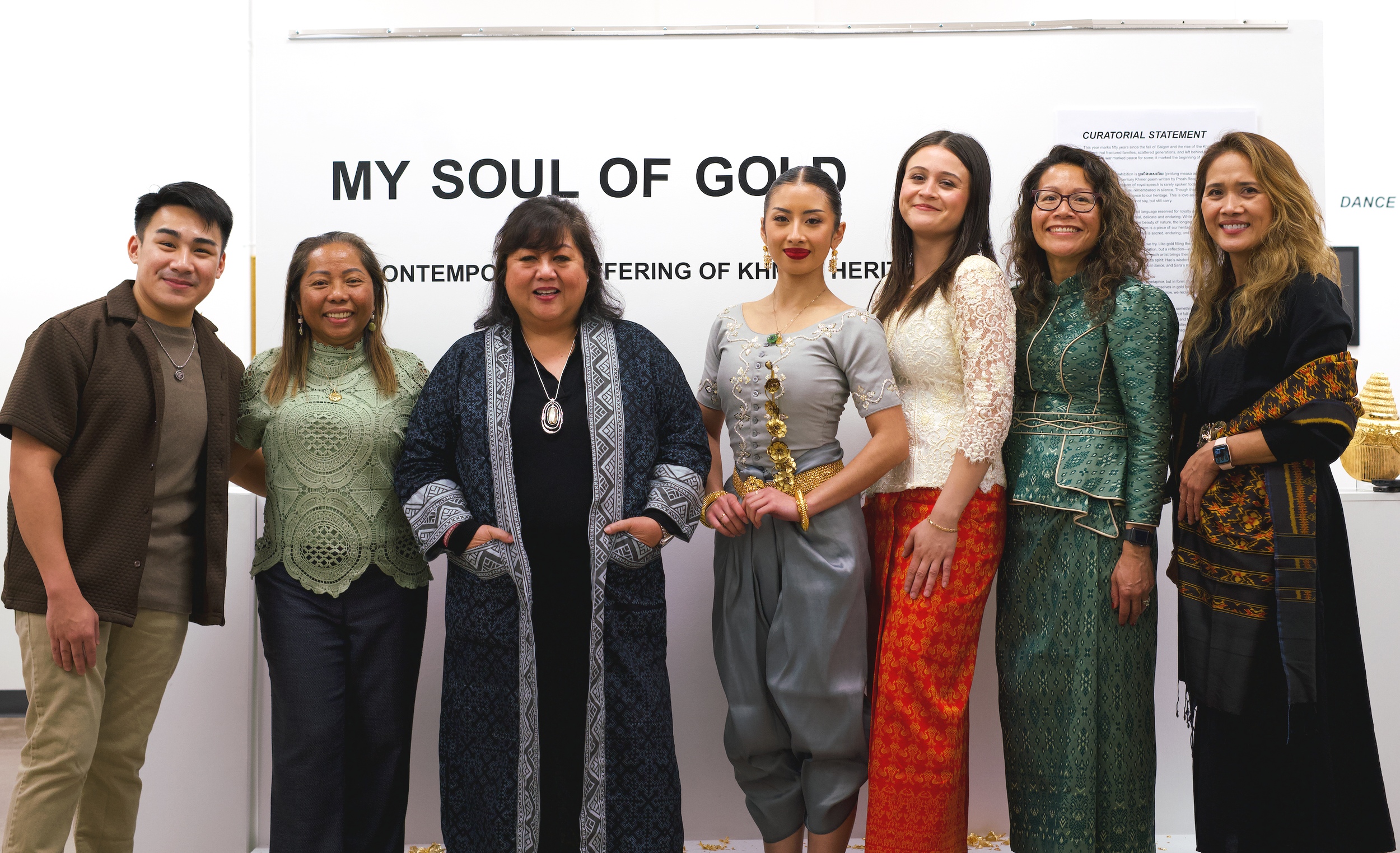
My Soul of Gold
ព្រលឹងមាសអើយ
A Contemporary Offering Of Khmer Heritage
Sara Gregor
Hao Taing
Gabriella Sour
ABOUT
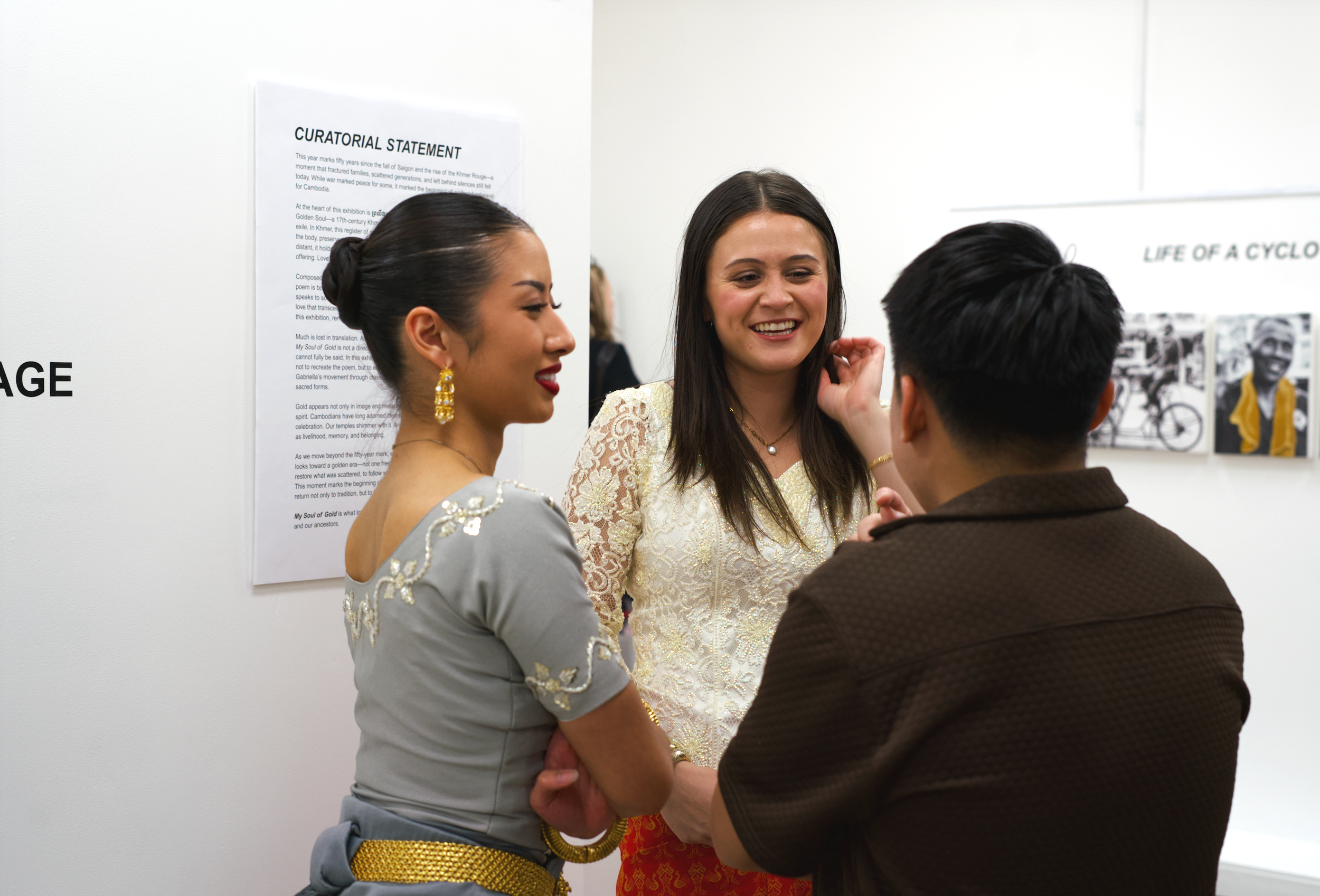
At the heart of this exhibition is
ព្រលឹងមាសអើយ (prolung measa aey),
which translates to Golden Soul
from a 17th-century Khmer poem written by Preah Reaj Somphear, a king in exile. In Khmer, this register of royal speech is rarely spoken today, yet it lives on—felt in the body, preserved in ritual, remembered in silence. Though the language may seem distant, it holds deep significance to our heritage. This is love as reverence. Love as offering. Love as what we cannot say, but still carry.
Composed in rhythmic, elevated language reserved for royalty and sacred expression, the poem is both intimate and formal, delicate and enduring. While addressed to a princess, it speaks to something greater: the beauty of nature, the longing of the soul, and a divine love that transcends form. This poem is a piece of our heritage, carefully spirit at the center of this exhibition, reminding us of what is sacred, enduring, and still waiting to be spoken.
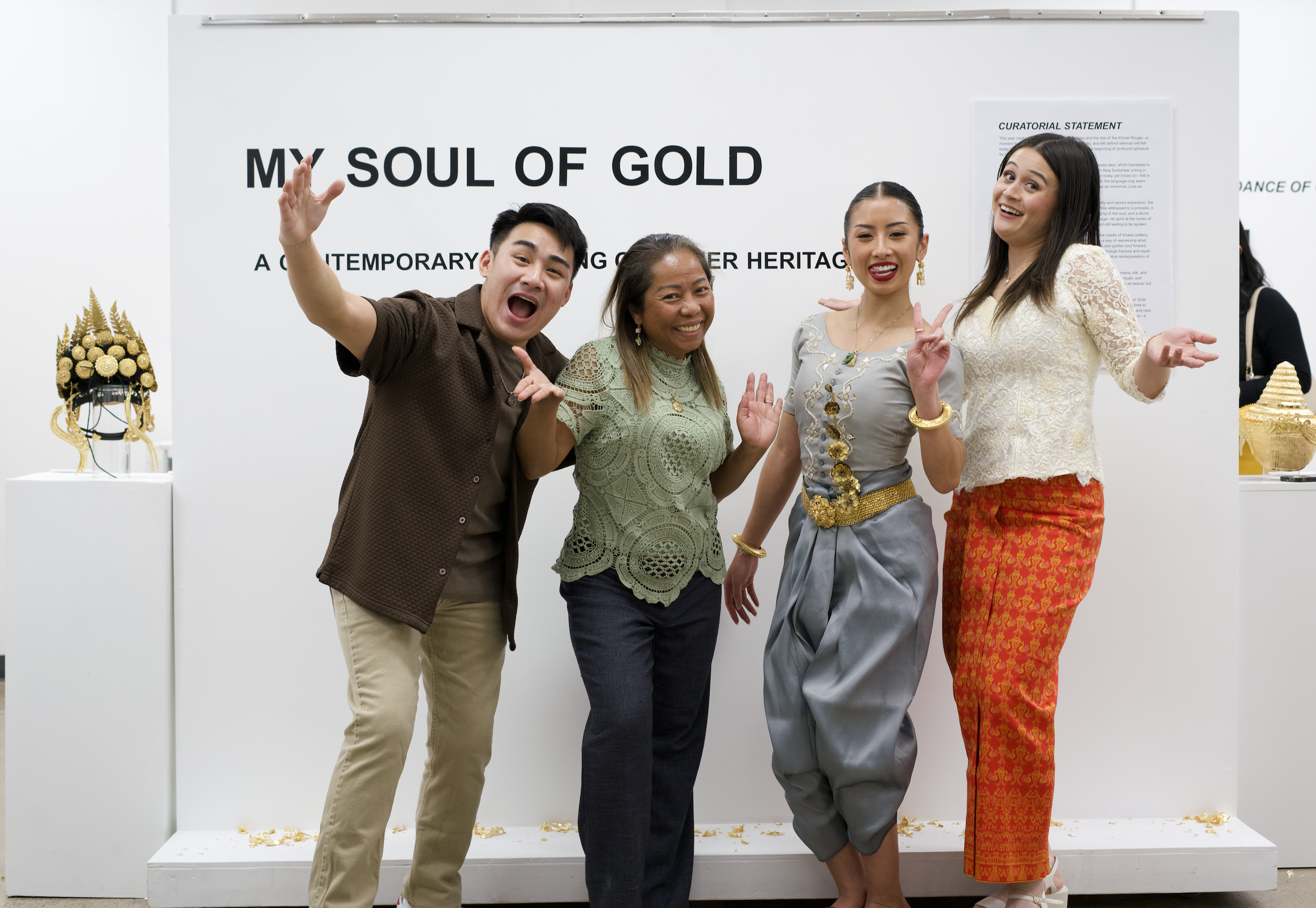
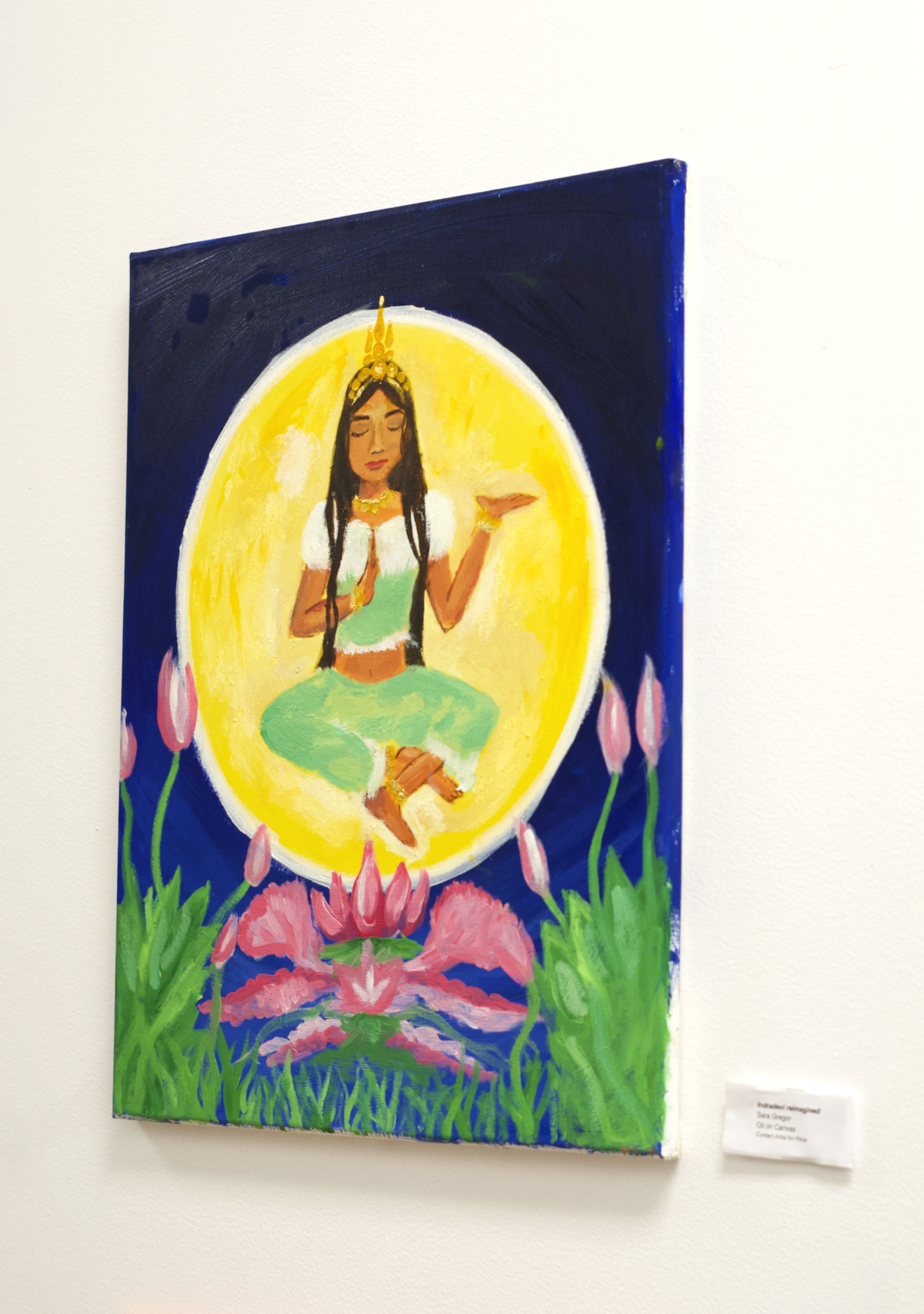
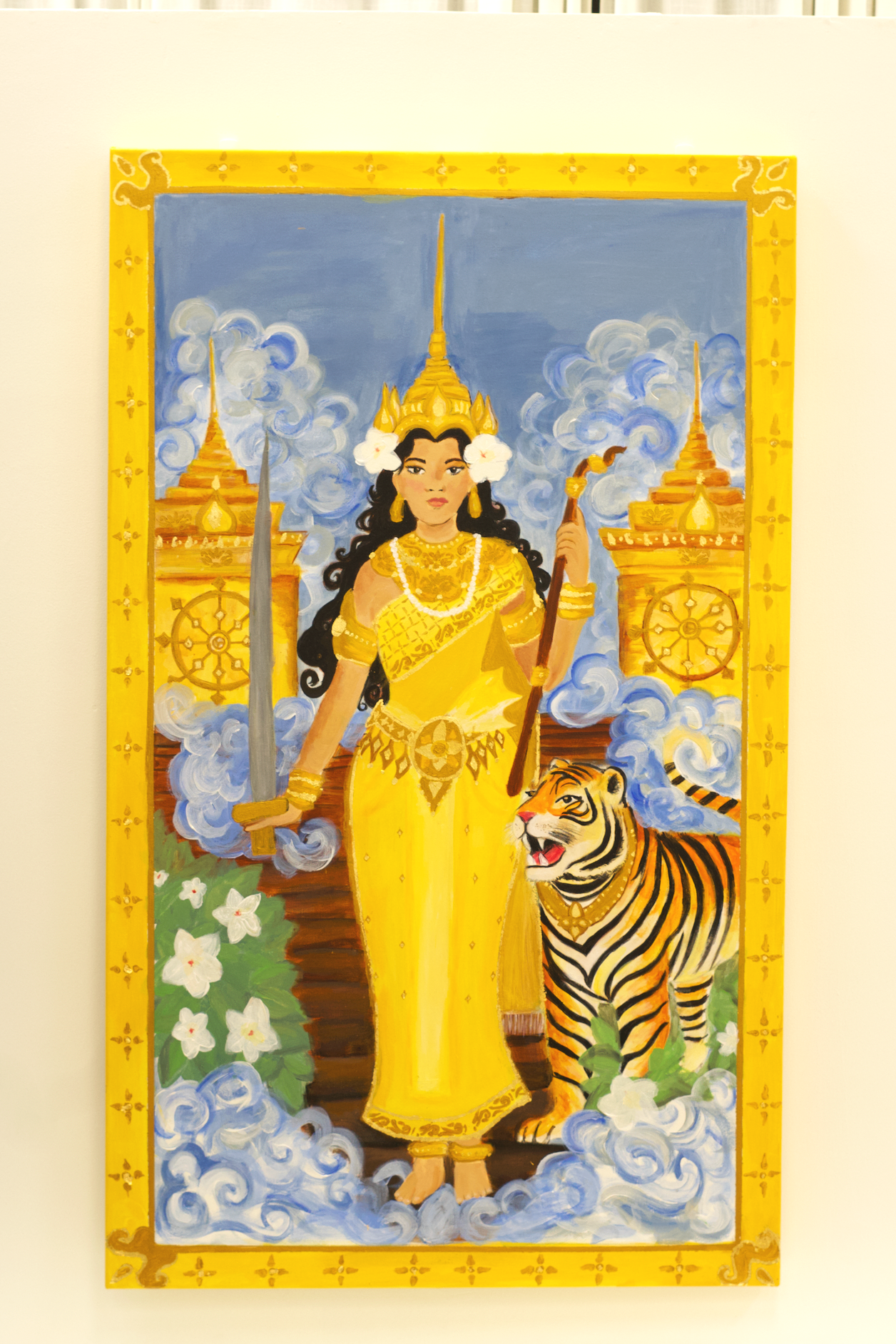
Much is lost in translation. And still, we try. Like gold filling the cracks of broken pottery, My Soul of Gold is not a direct translation, but a reflection, a way of expressing what cannot fully be said. In this exhibition, each artist brings their own golden soul forward, not to recreate the poem, but to echo its spirit. Hao’s wisdom through fracture and repair, Gabriella’s movement through classical dance, and Sara’s meditative reinterpretation of sacred forms.
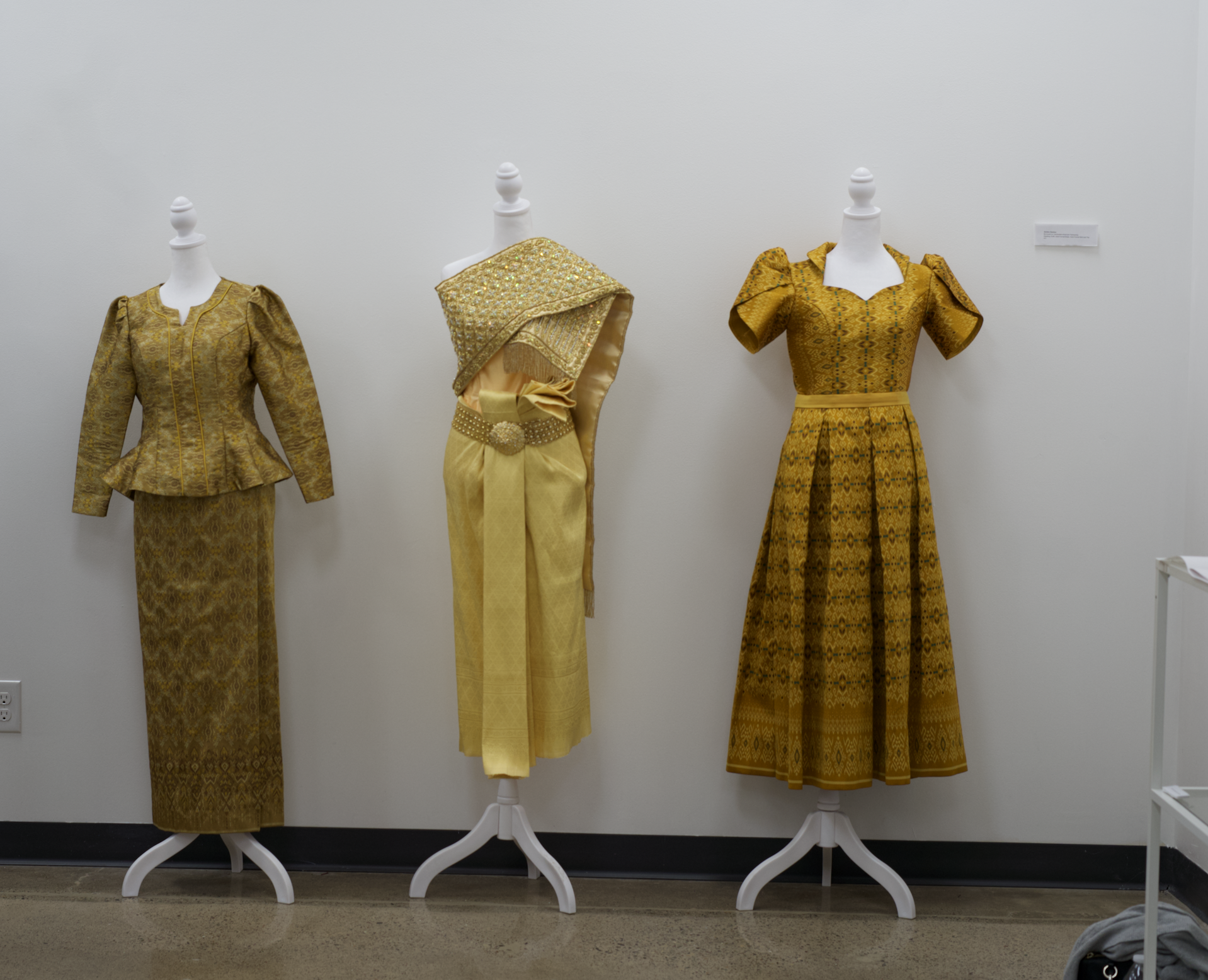
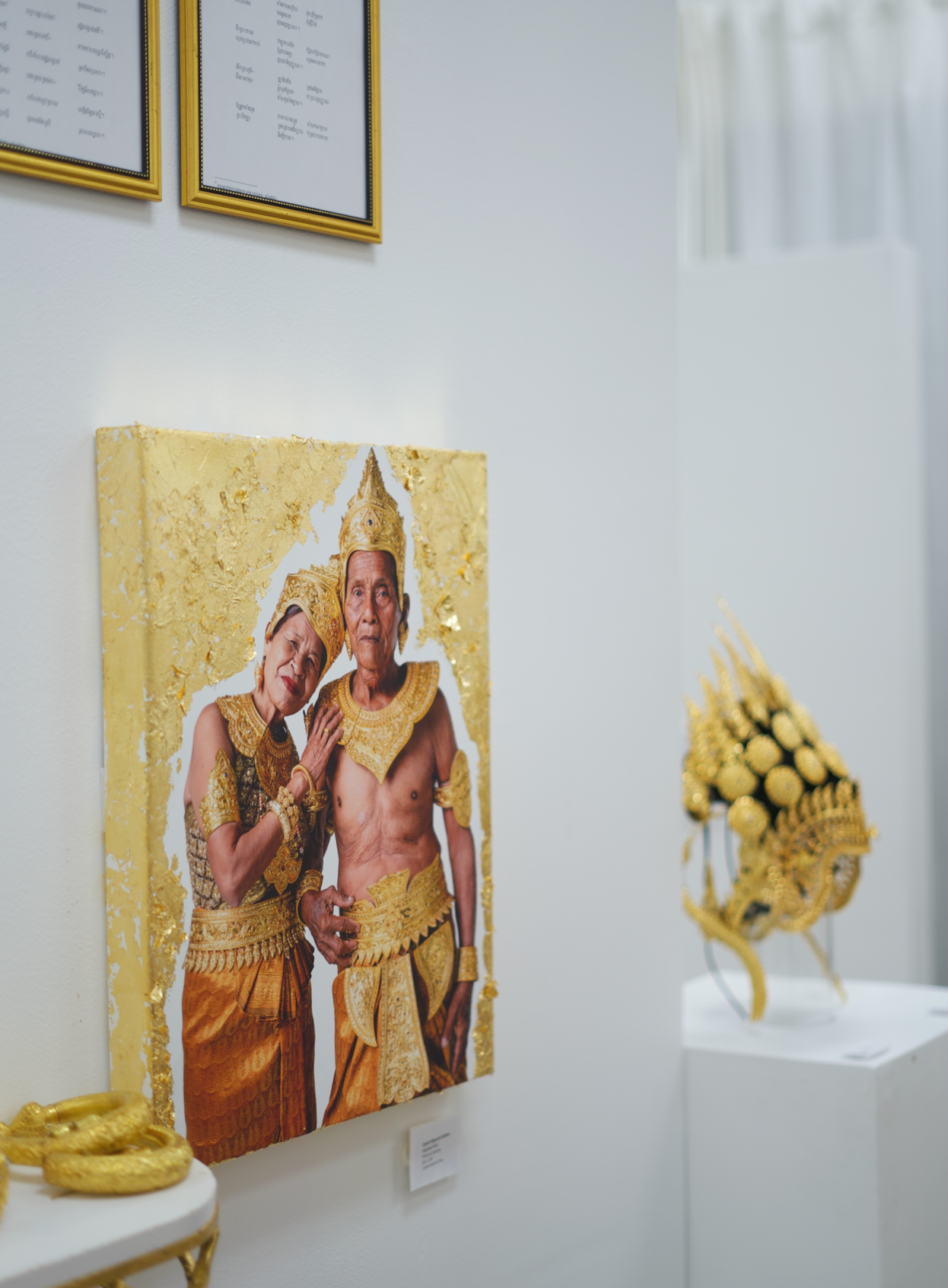
Gold appears not only in image and metaphor, but in form: in jewelry, crowns, silk, and spirit. Cambodians have long adorned themselves in gold for weddings, rituals, and celebration. Through this exhibit, we reclaim it as apart of our livelihood, memory, and belonging.
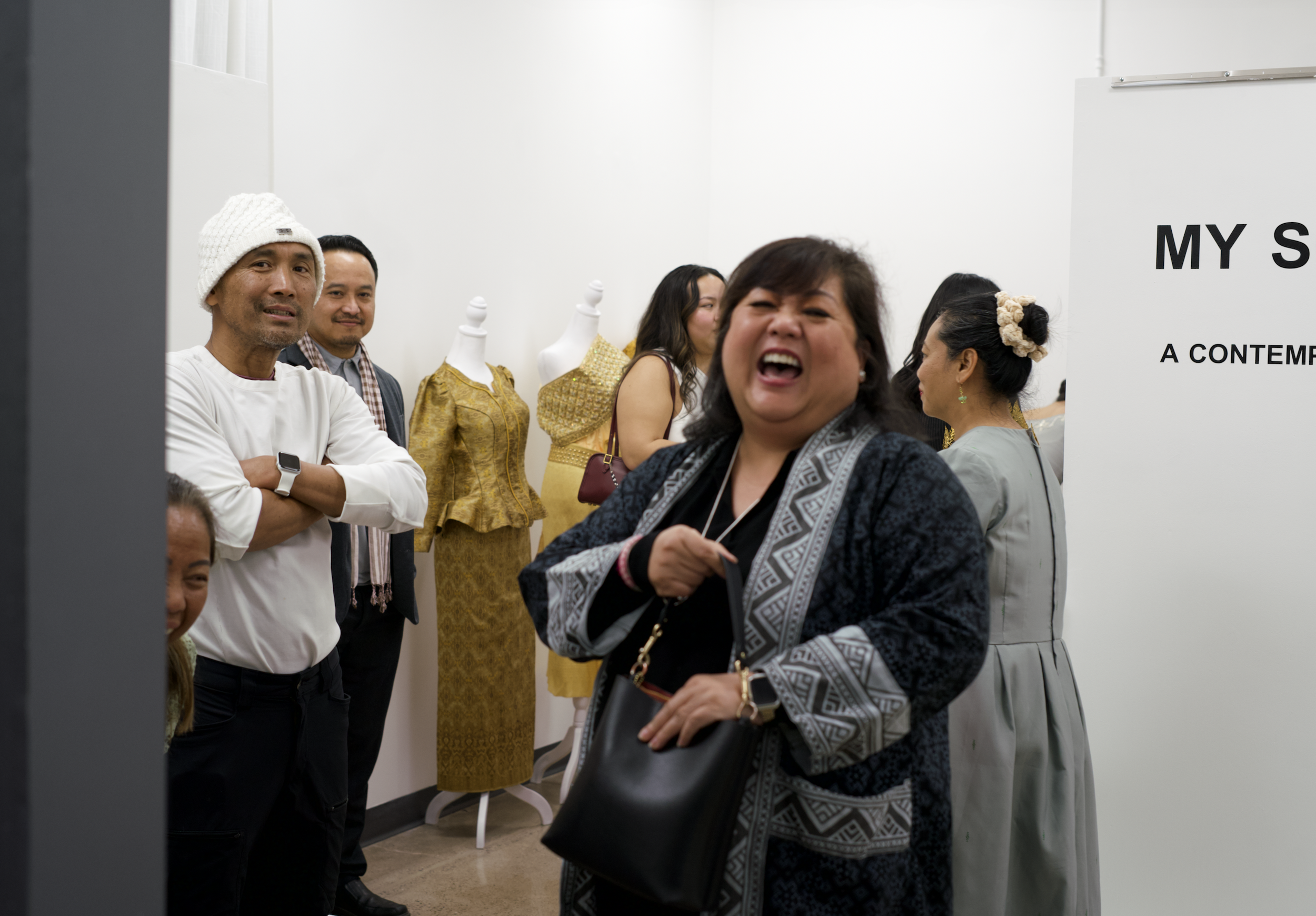
MY SOUL OF GOLD
·
ព្រលឹងមាសអើយ
·
MY SOUL OF GOLD · ព្រលឹងមាសអើយ ·
Wisdom of Gold
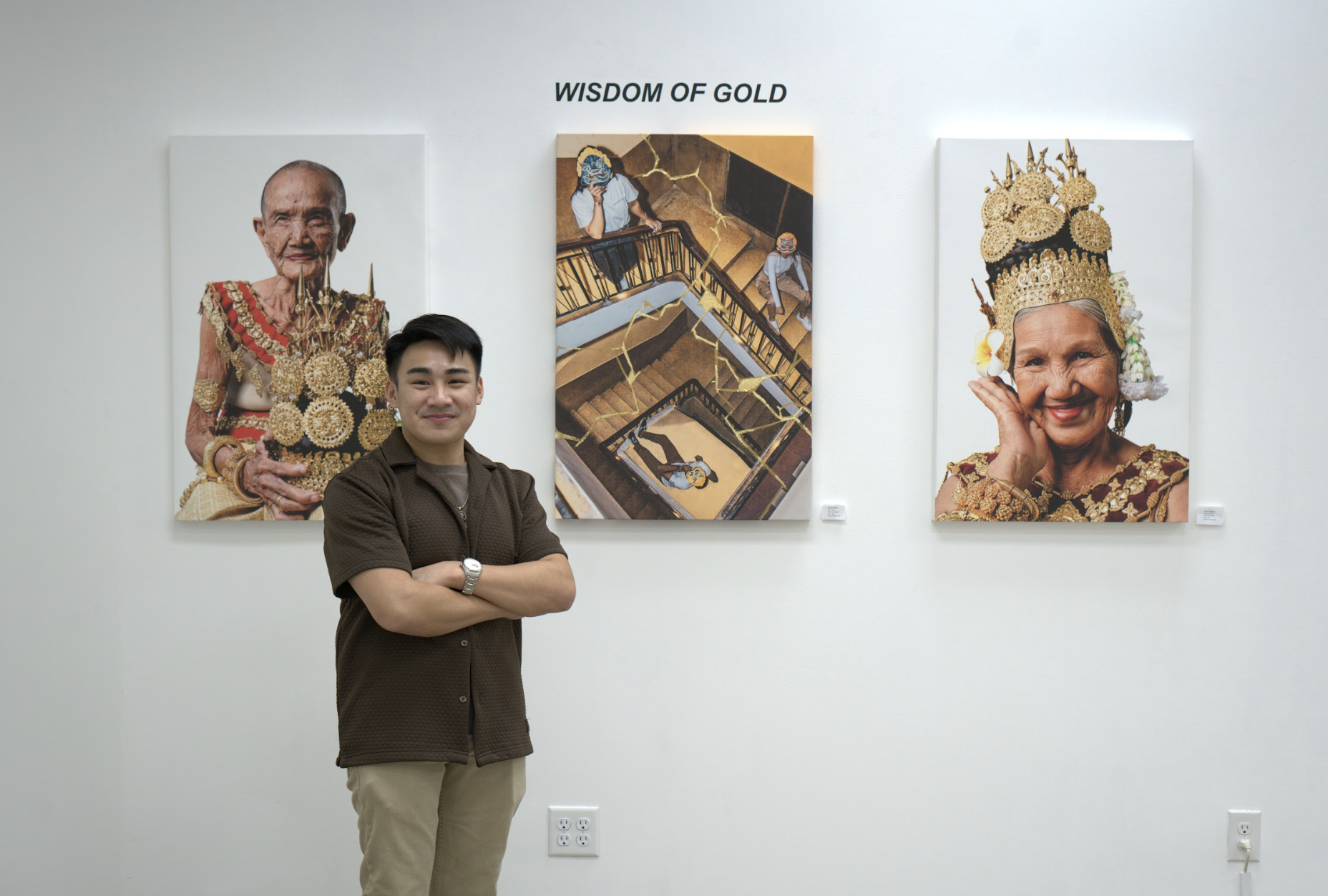
When My Soul of Gold was first envisioned, photojournalist Hao Taing imagined a body of work that would honor Cambodia’s elders, specifically those whose presence often goes unseen. As the founder of Apsara Grannies, Hao has long been committed to capturing the raw beauty of daily life in Cambodia. But his work extends beyond image-making. It is a form of humanitarian storytelling, meant to preserve dignity, raise awareness, and restore visibility to those who have been overlooked.
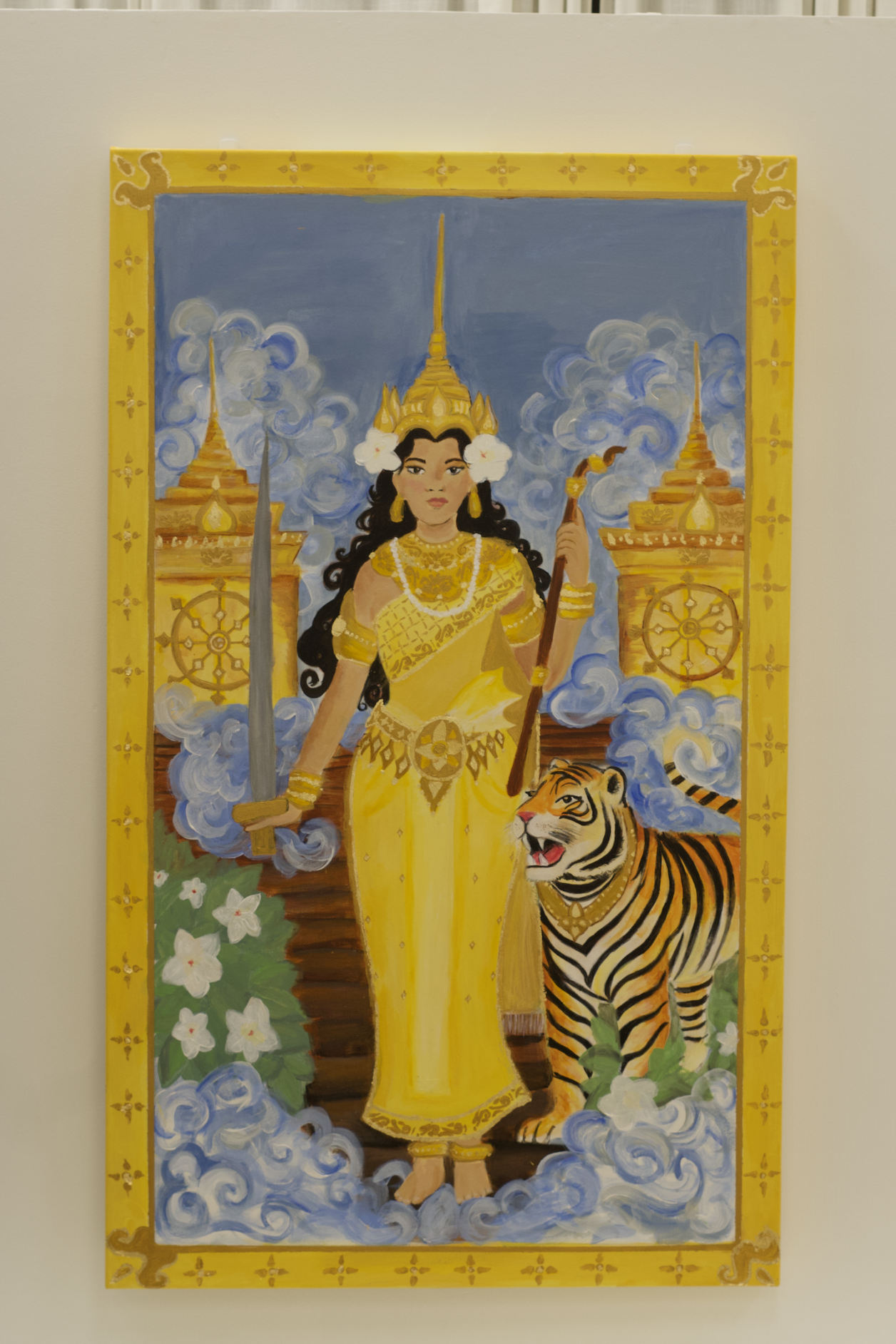
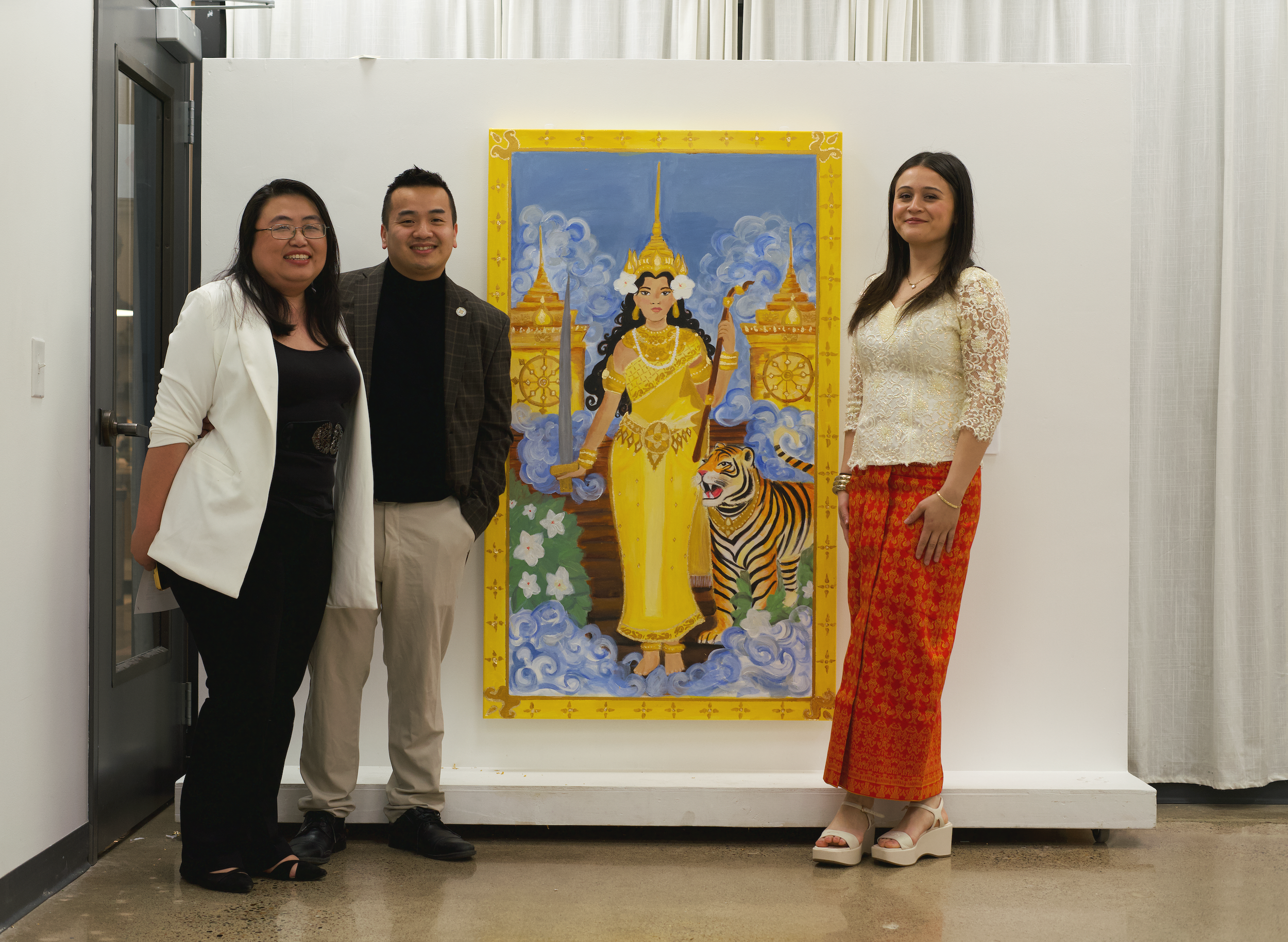
Inspired by the Japanese art of kintsugi—the practice of repairing broken pottery with gold—Hao saw the cracks in Cambodia’s history not as something to conceal, but something to honor. To bring this vision to life, he invited painter Sara Gregor to collaborate. Hao encouraged Sara to consider the idea of metaphorically “filling the cracks” for My Soul of Gold. Together, they reimagined images, asking us to consider where beauty lives, and who we choose to honor.
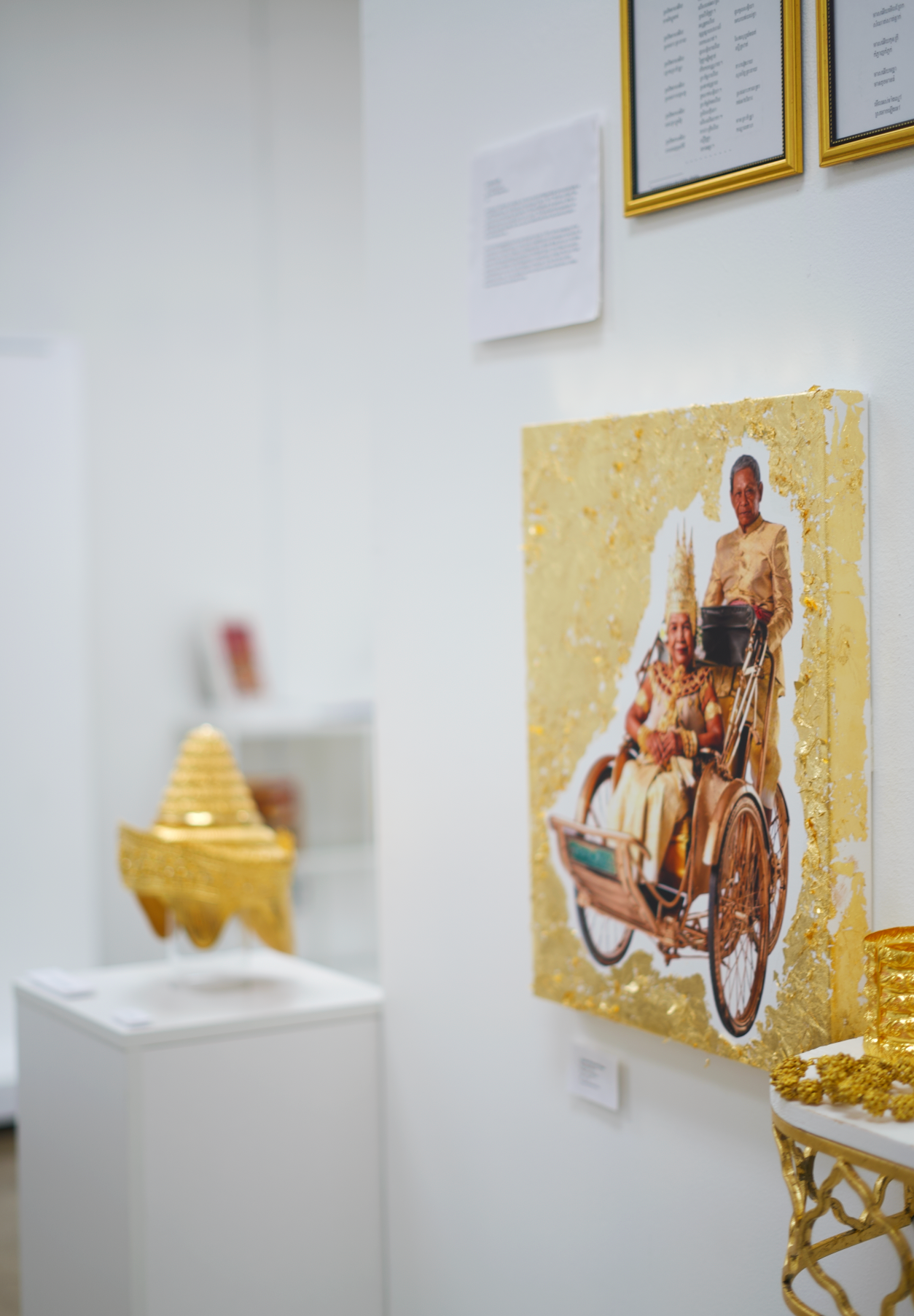
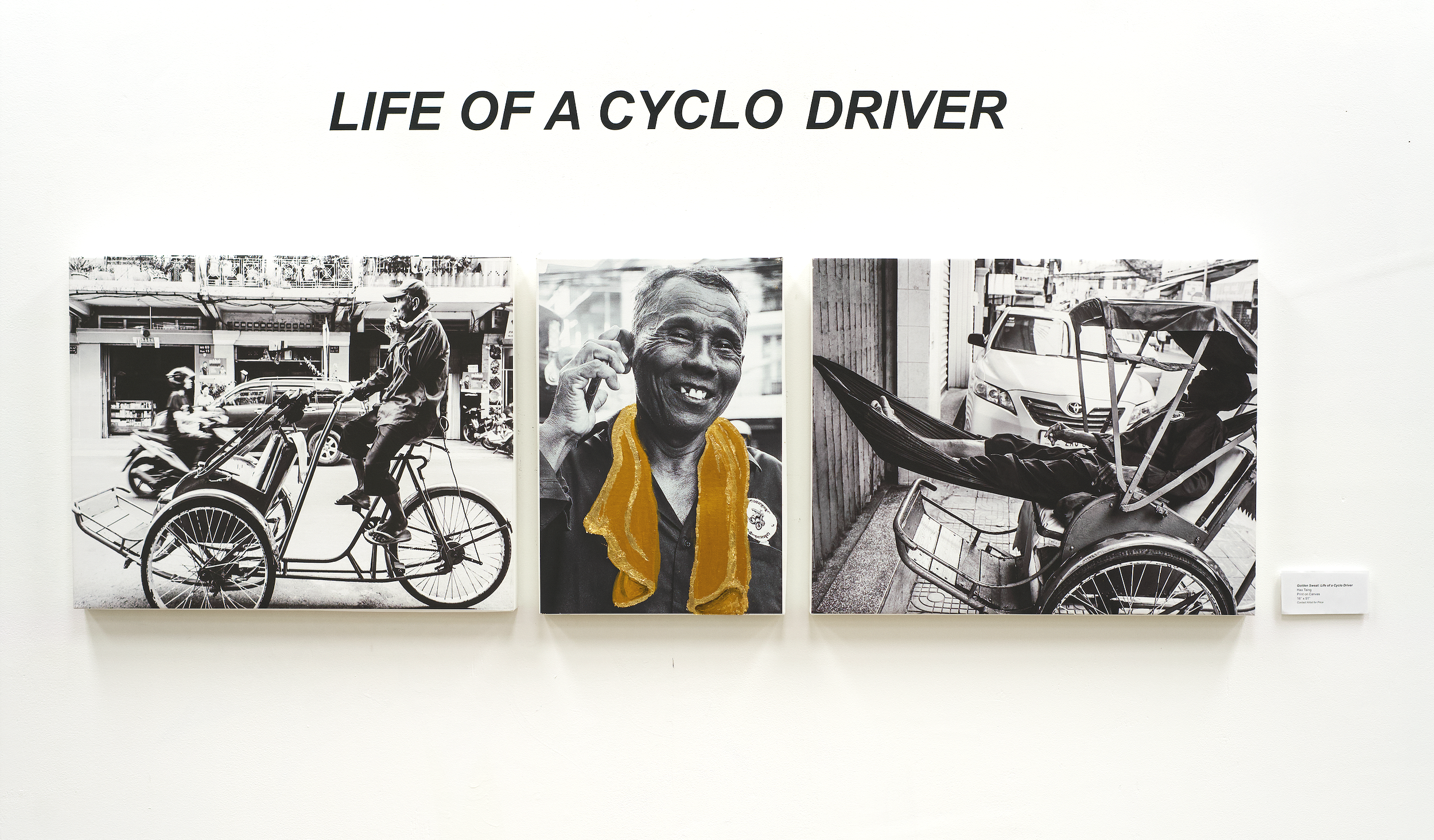
Wisdom of Gold features portraits of grandmothers, cyclo drivers, and elderly couples—many of whom have lived through poverty, displacement, and invisibility. Dressed in ceremonial gold and traditional adornment, they appear not as subjects, but as sacred figures. The series also includes experimental works such as The Broken Mask—a layered meditation on identity and fragmentation in post-war Cambodian life. In several images, golden cracks and breaks appear filled with gold, like the style of kintsugi. This is to invite viewers to witness the process of cultural repair.
Photojournalism, for Hao, is not just about bearing witness—it’s about building connection. His work bridges the gap between visibility and dignity, using storytelling to call attention to lives often overlooked. In a country still shaped by the aftermath of war and inequity, Hao turns his lens toward those living and laboring at the margins: elders on the street, cyclo drivers, vendors, and community caretakers. Wisdom of Gold offers reverence for those who carry memory in their bones and reminds us that healing, like gold, belongs in the hands of those who have survived.
Hao Taing is a photographer, a marketer, and the visionary founder of the international non-profit, Local4Local. With a mission to catalyze kindness, Local4Local is a grassroots 501(c)(3) organization dedicated to uplifting the lives of cyclo drivers and informal workers in Cambodia; emphasizing on alleviating food hunger and promoting community tourism. As a creative at heart, Hao also co-founded Feel The Warmth, an artist-led initiative behind the heartfelt projects including Apsara Granny, and the Cyclo King. A proud graduate of the University of Minnesota in Marketing, Hao currently works with the Brand and Marketing team the Minnesota Star Tribune.
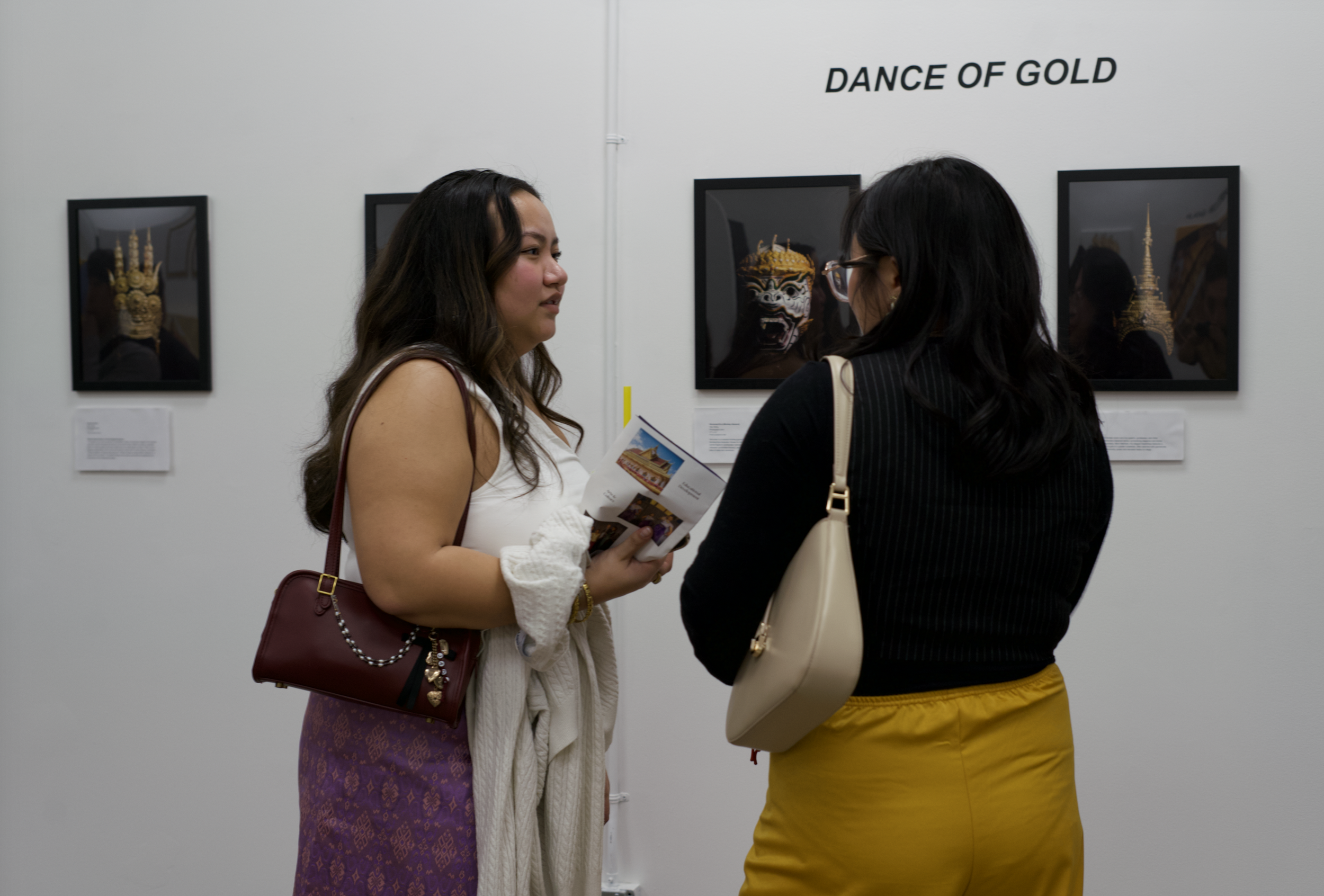
Dance of Gold
Gold lives in movement, memory, and tradition. In Cambodian culture, Robam is more than performance. Robam is sacred embodiment, a form of prayer that mirrors the divine within us. Dance of Gold honors this lineage through the lens of Gabriella Sour, a principal dancer, educator, and cultural steward whose journey began at twelve with a single step into the tradition.
In a world where so much of Cambodia’s heritage was fractured, embodiment becomes a form of translation. Through movement, dancers carry what words cannot recover—gesture becomes language, ritual becomes memory.
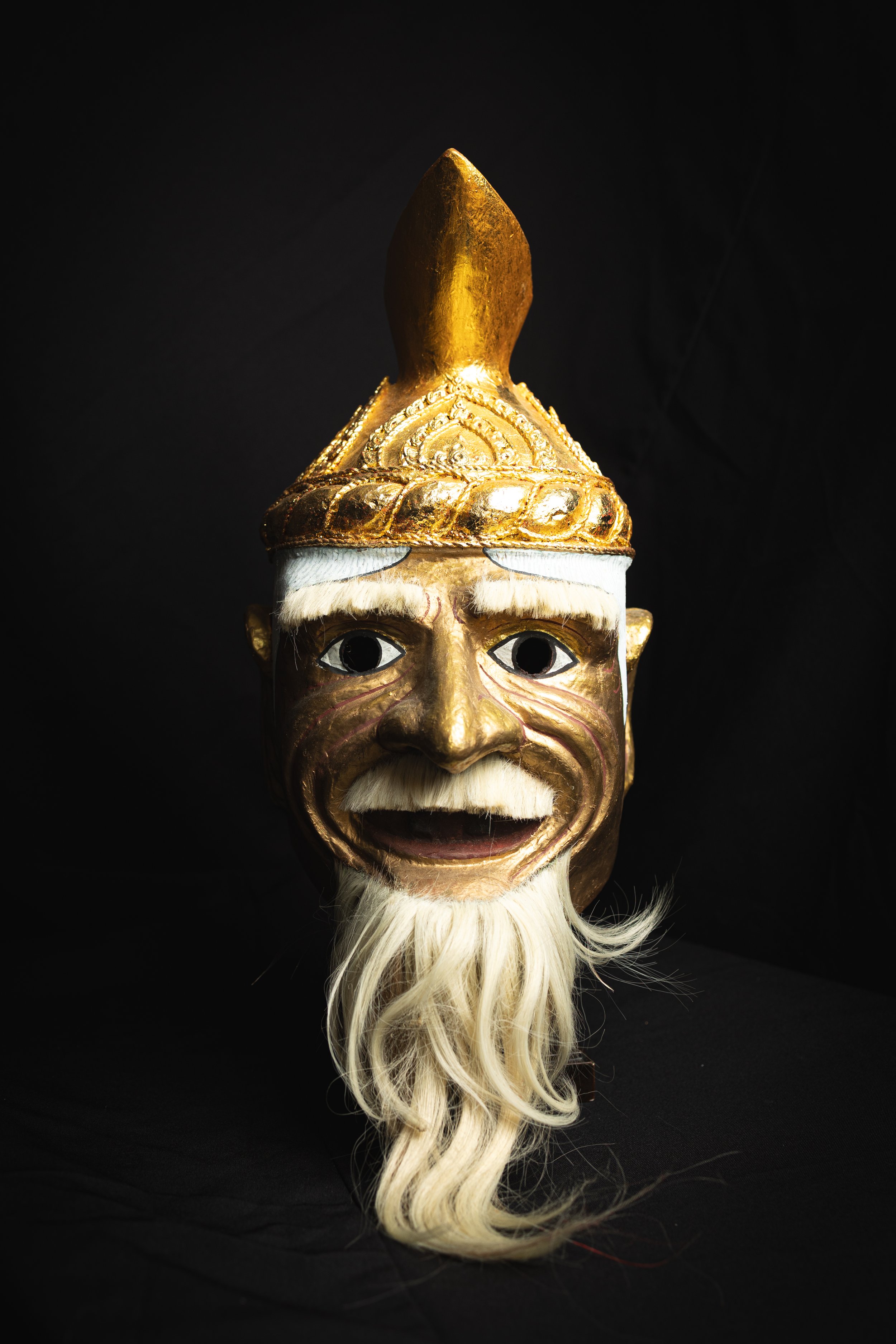
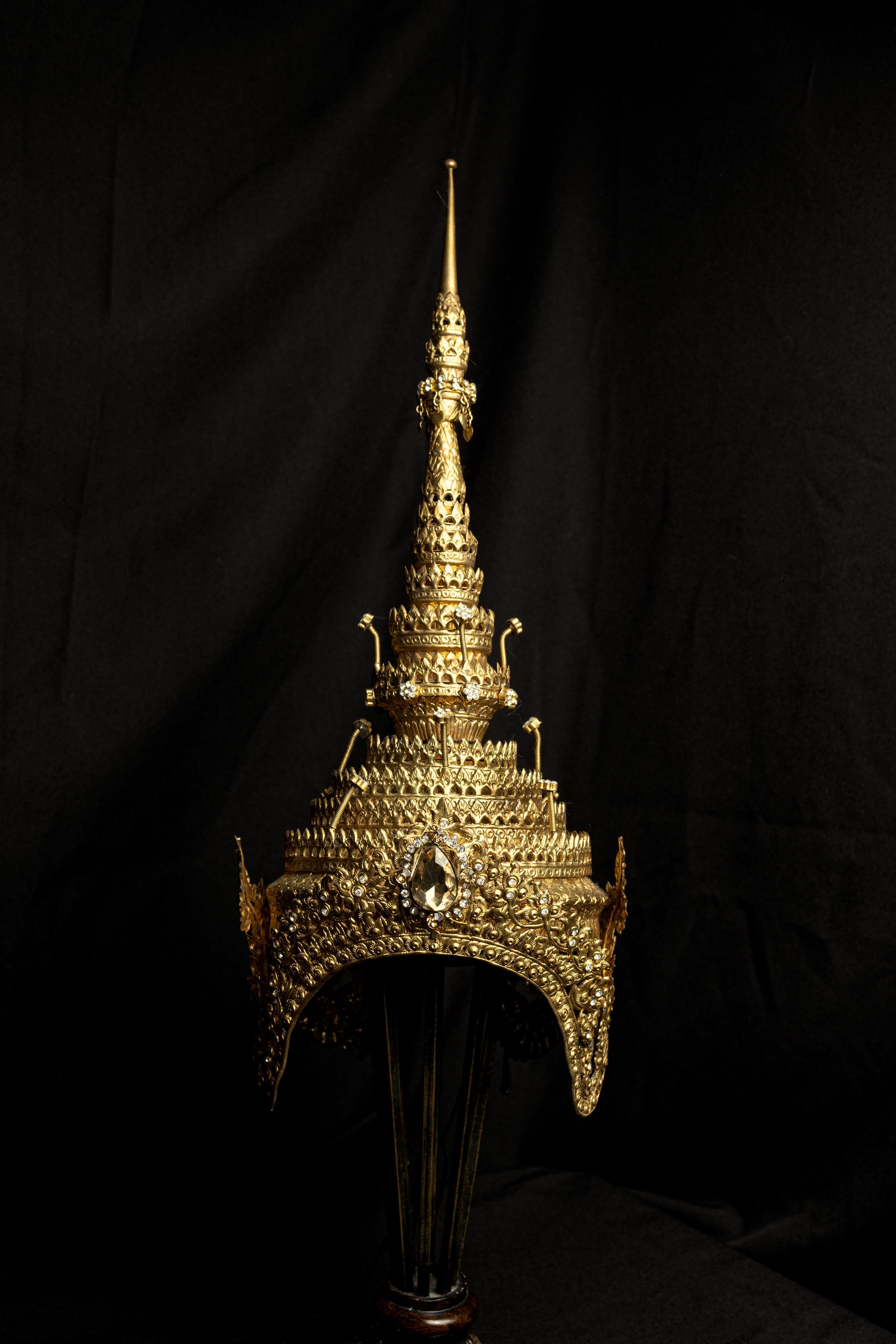
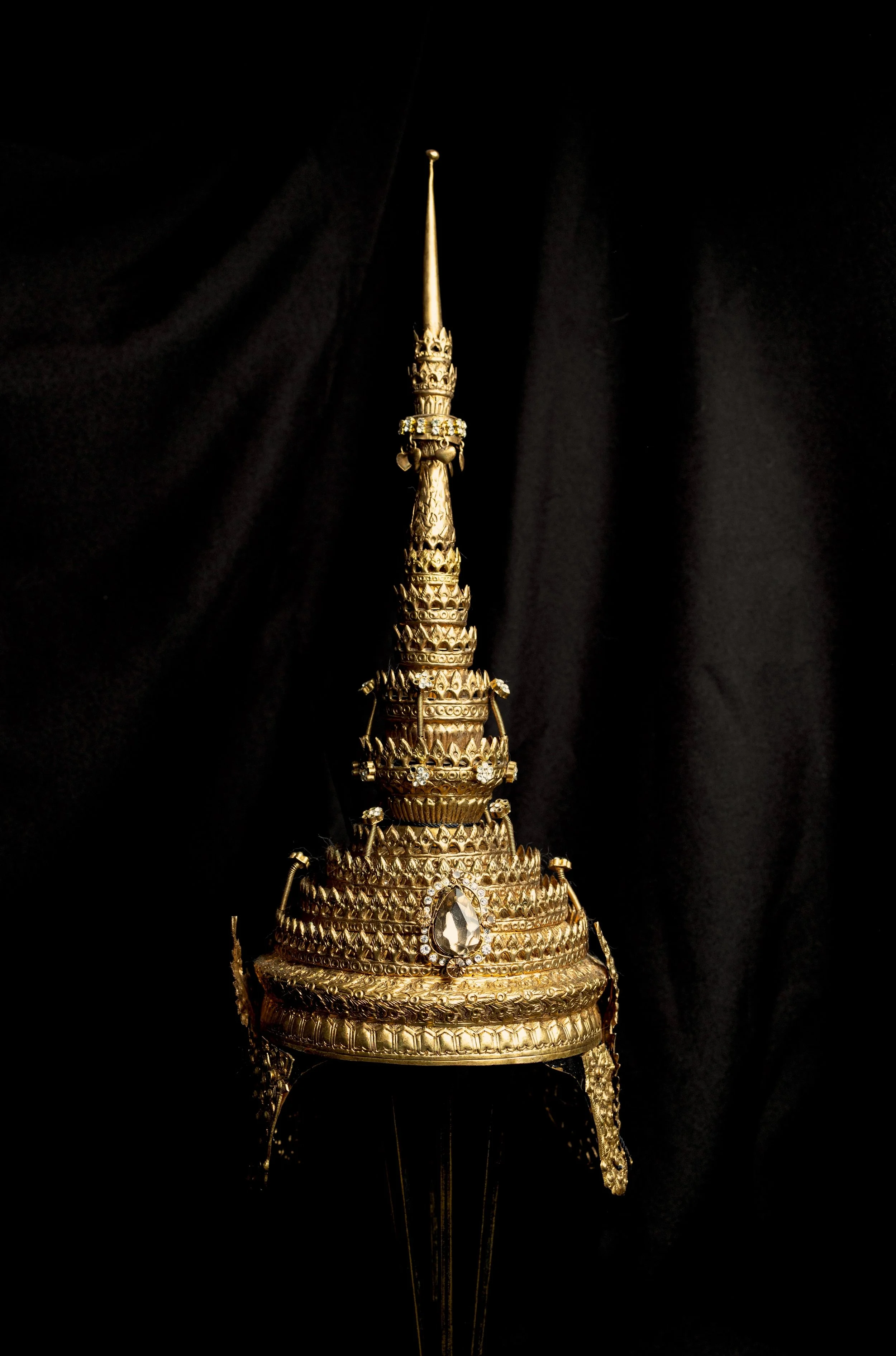
Dance of Gold highlights six foundational character archetypes: Makot Neang, Makot Nearong, Hanuman/Sva, Ream Eyso/Yeak, Lok Tha Moni Eysei, and the Celestial Apsara.
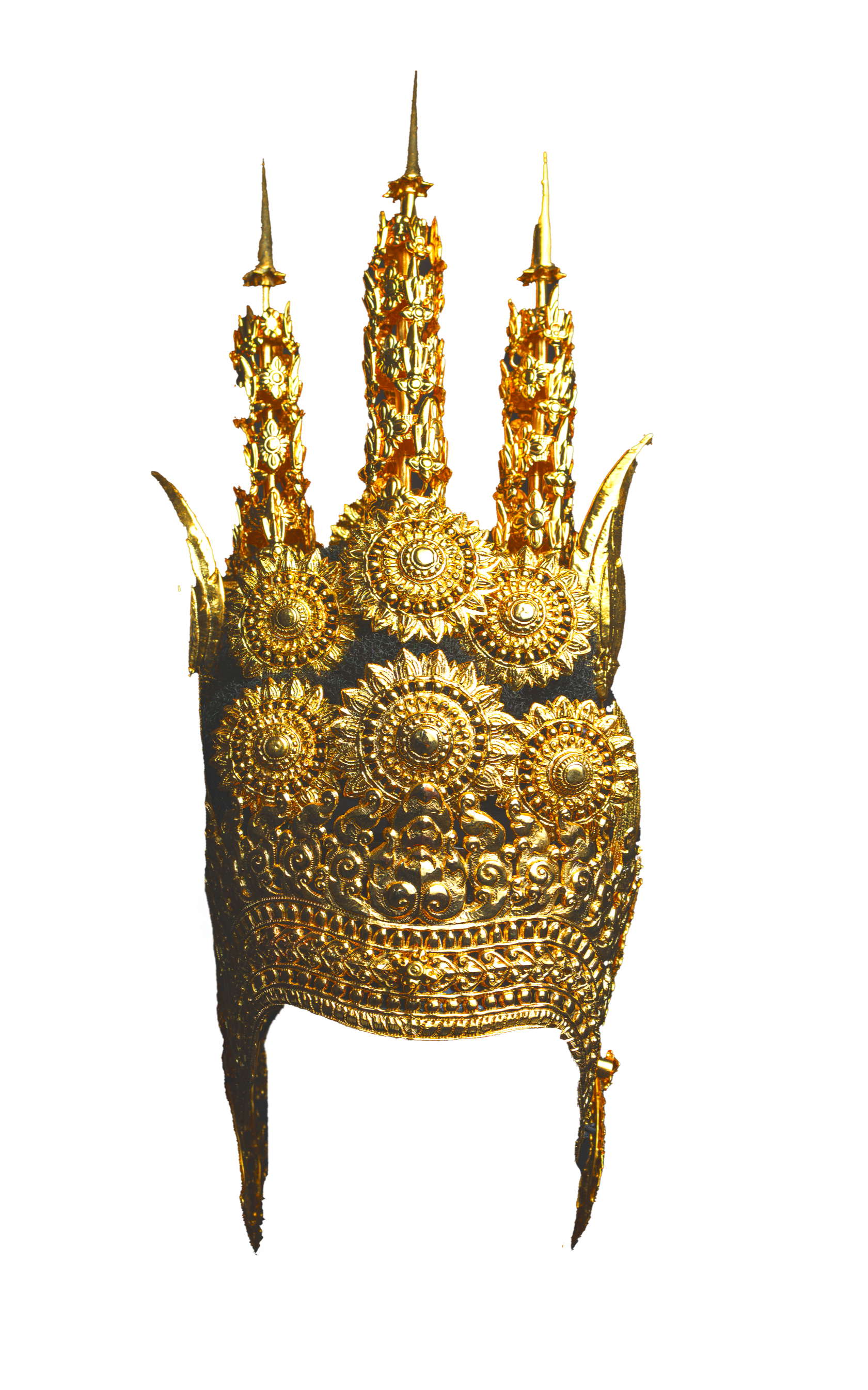
Photographed by Hao Taing in Gabriella’s family home, the crowns, masks, and garments featured are cherished relics worn in ceremony and preserved with care. These objects carry the weight of memory, the power of performance, and the honor of our Khmer heritage.
Dance of Gold reminds us that dance is not simply movement, but memory in motion. Khmer Robam is a sacred practice thread linking body, lineage, and land. Step by step, generation to generation.
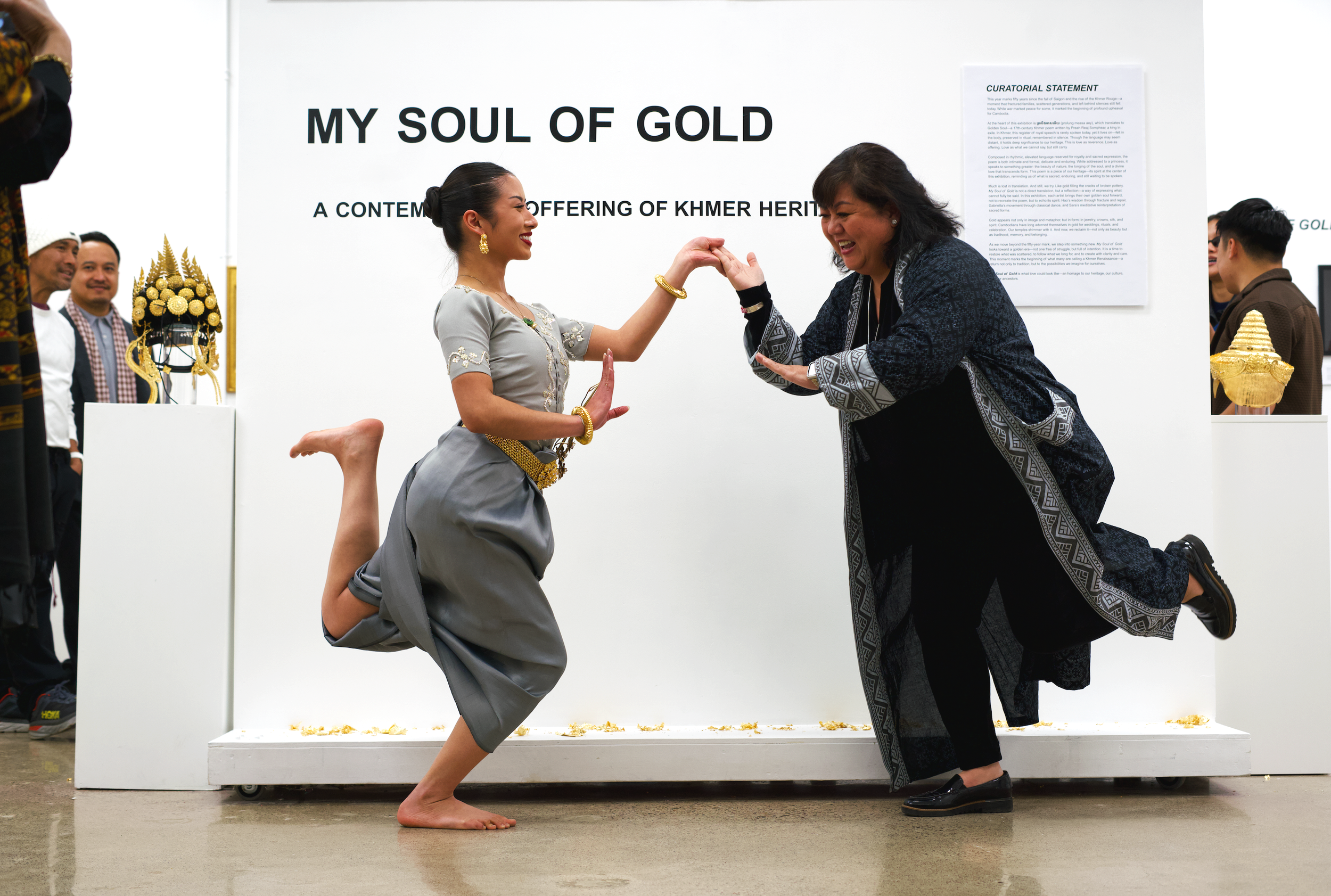
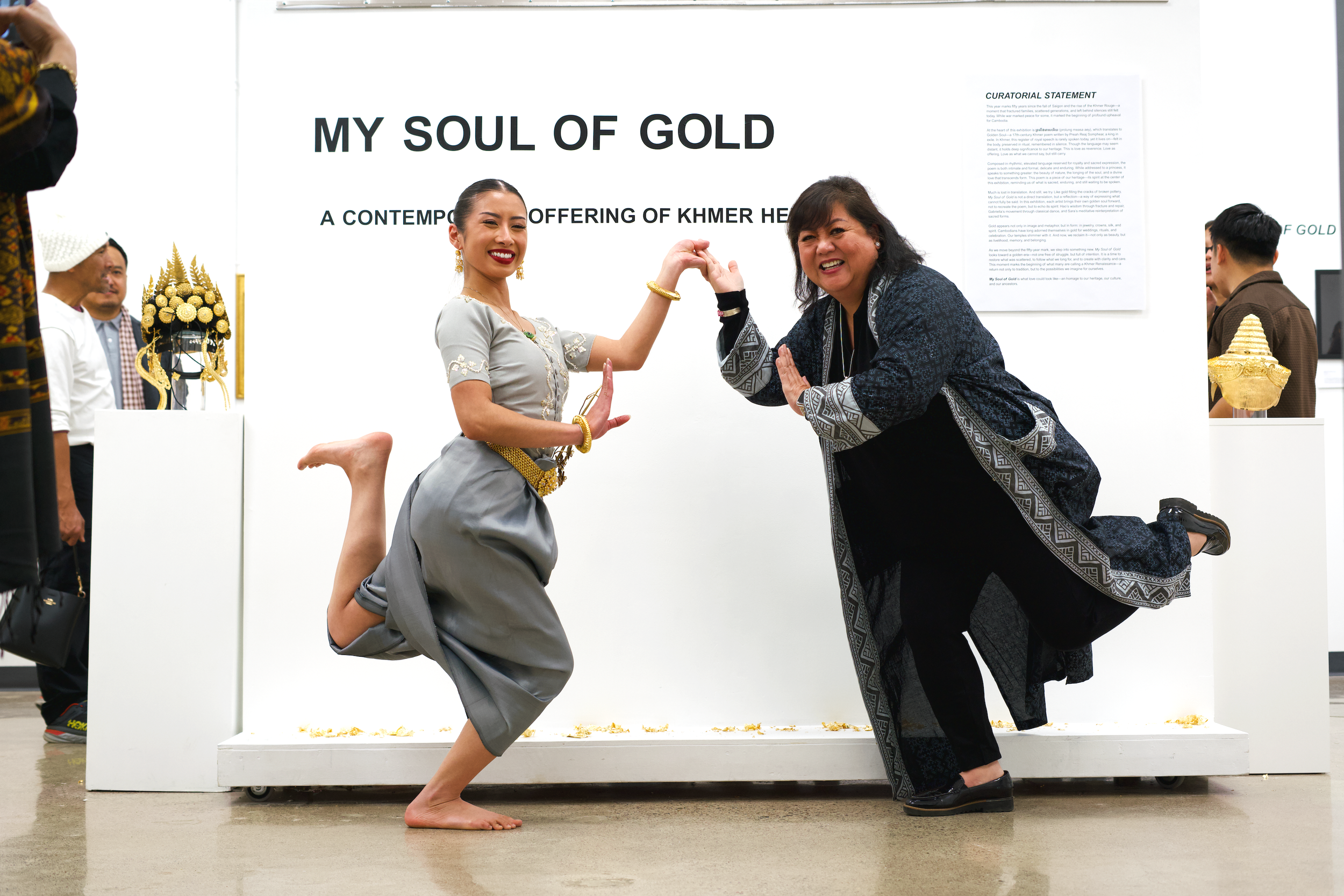
At the opening reception of My Soul of Gold at XIA Gallery, Gabriella led a live performance of Robam Phoung Neary (Blossoms of Femininity), honoring the grace and resilience of Khmer classical dance.
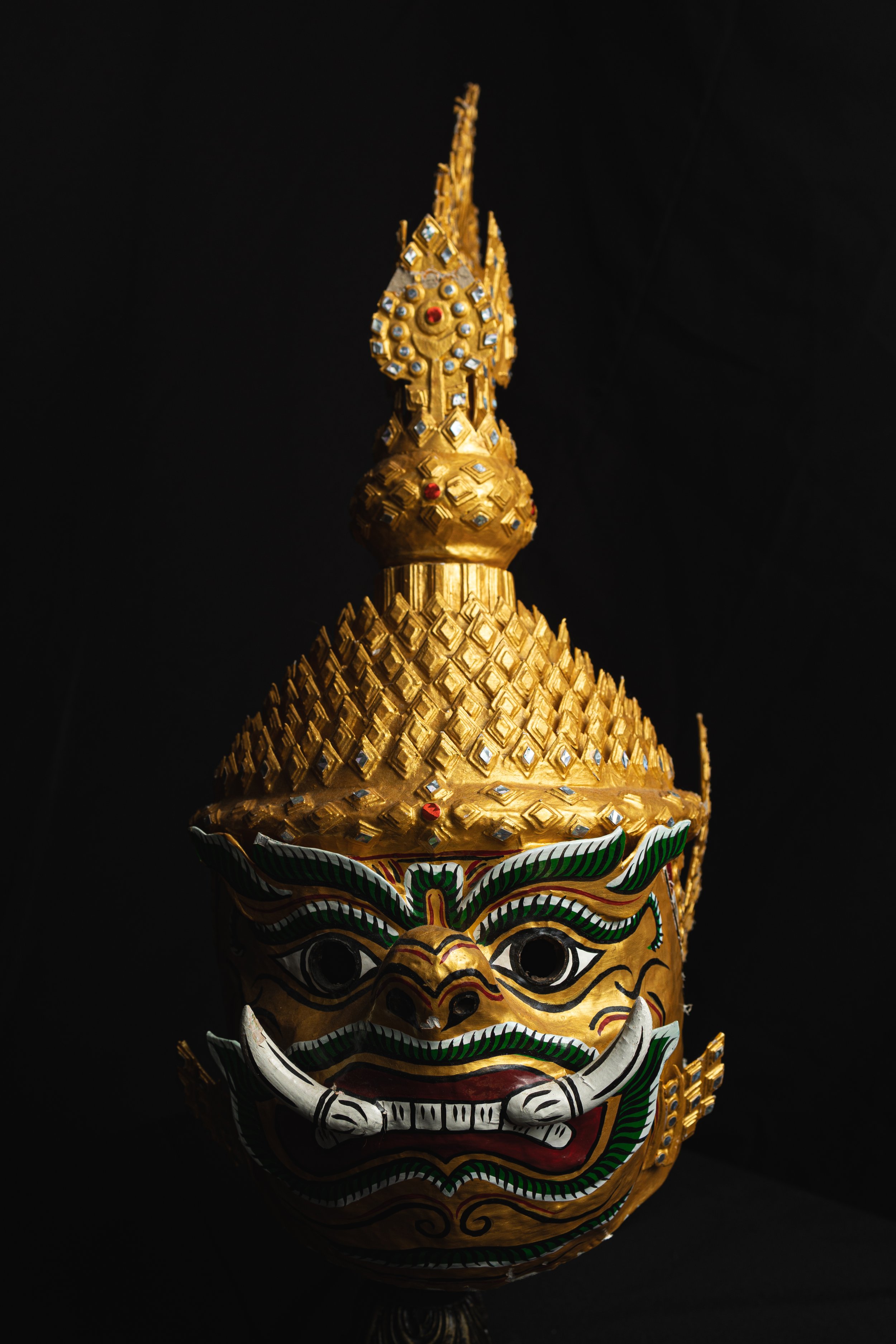
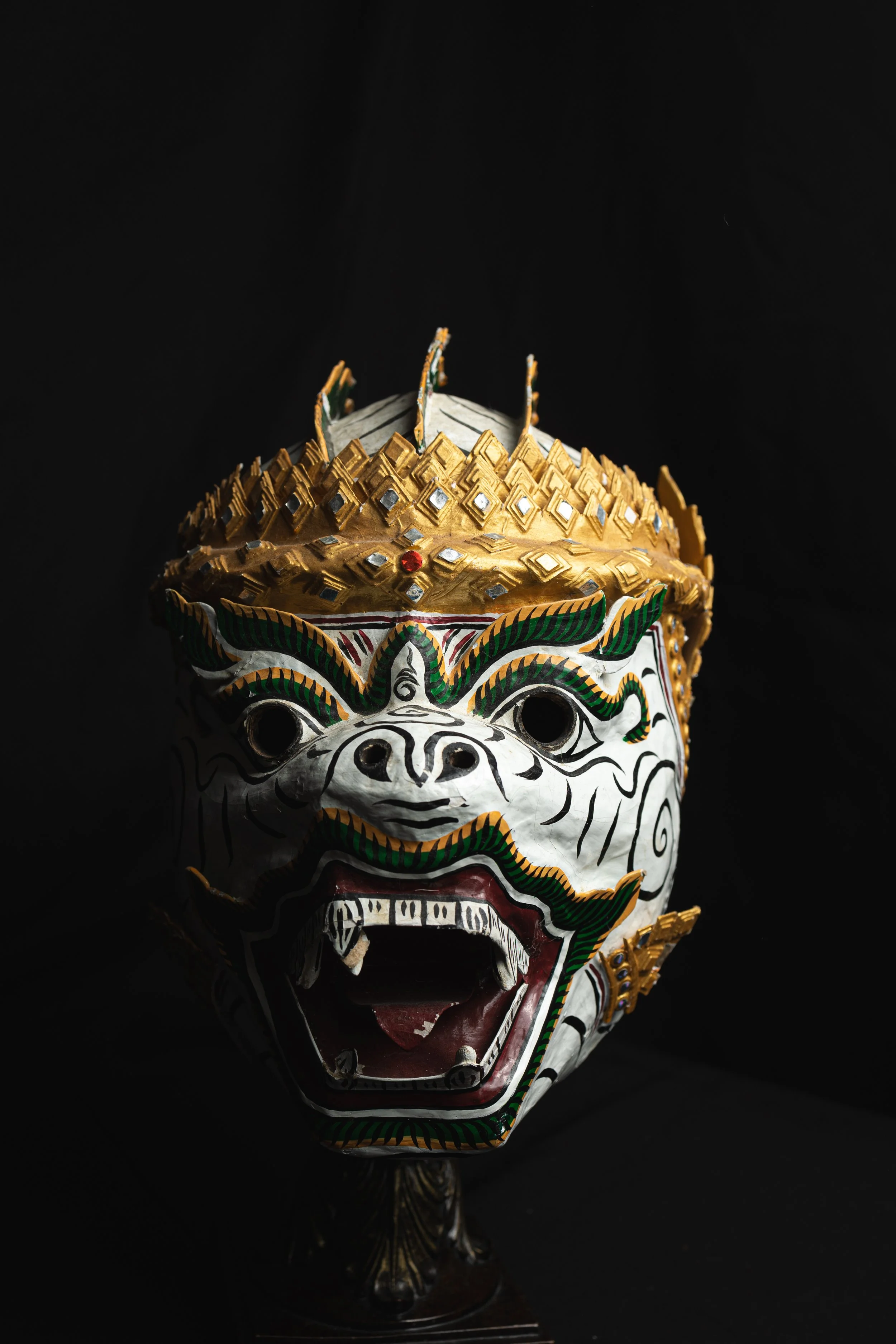
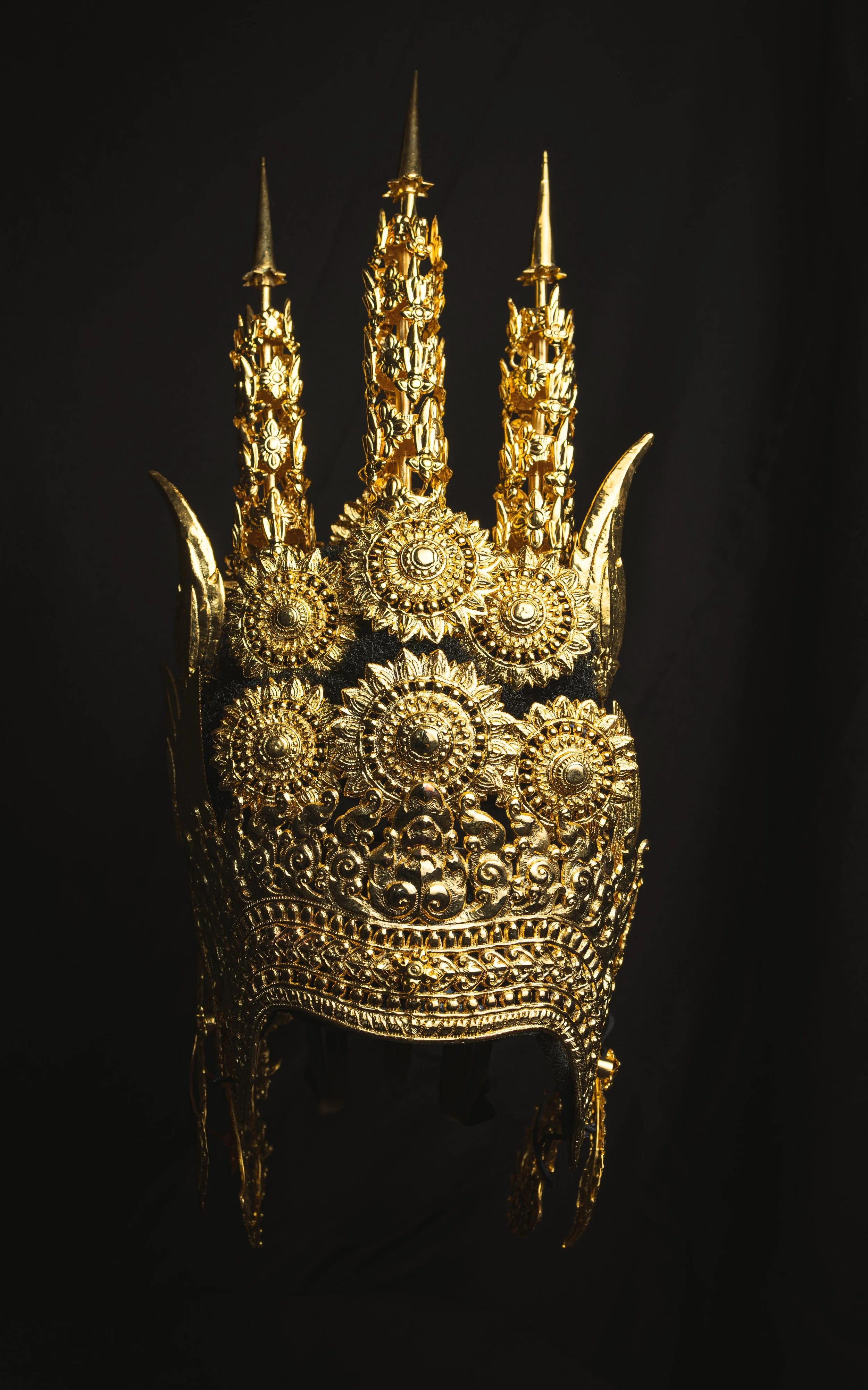
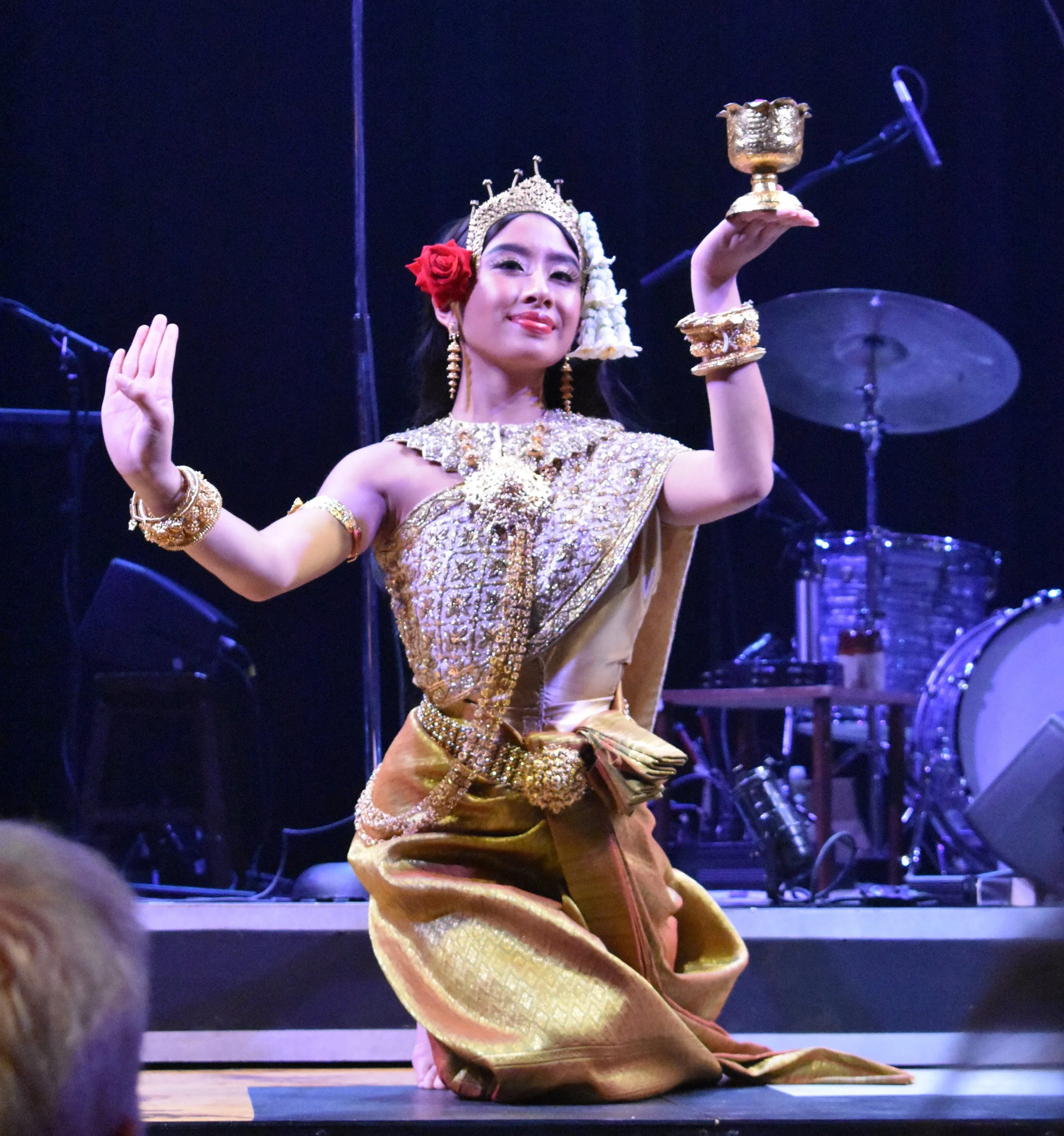
Gabriella Sour is a Cambodian dancer dedicated to preserving and advancing Khmer classical dance. She began training at age twelve, specializing in the female role (Neang), and has studied under master teachers Phousita Huy and Yousedy Peov, as well as Peter Veth and Garrett Sour. Gabriella now serves as Operations Manager of Wattanak Dance Troupe, helping shape the artistic and organizational direction of the community.
Soul of GOld
My Soul of Gold is a revival of sacred image-making—my offering to the spiritual and artistic traditions that have shaped Cambodia’s cultural soul and my own path of return.
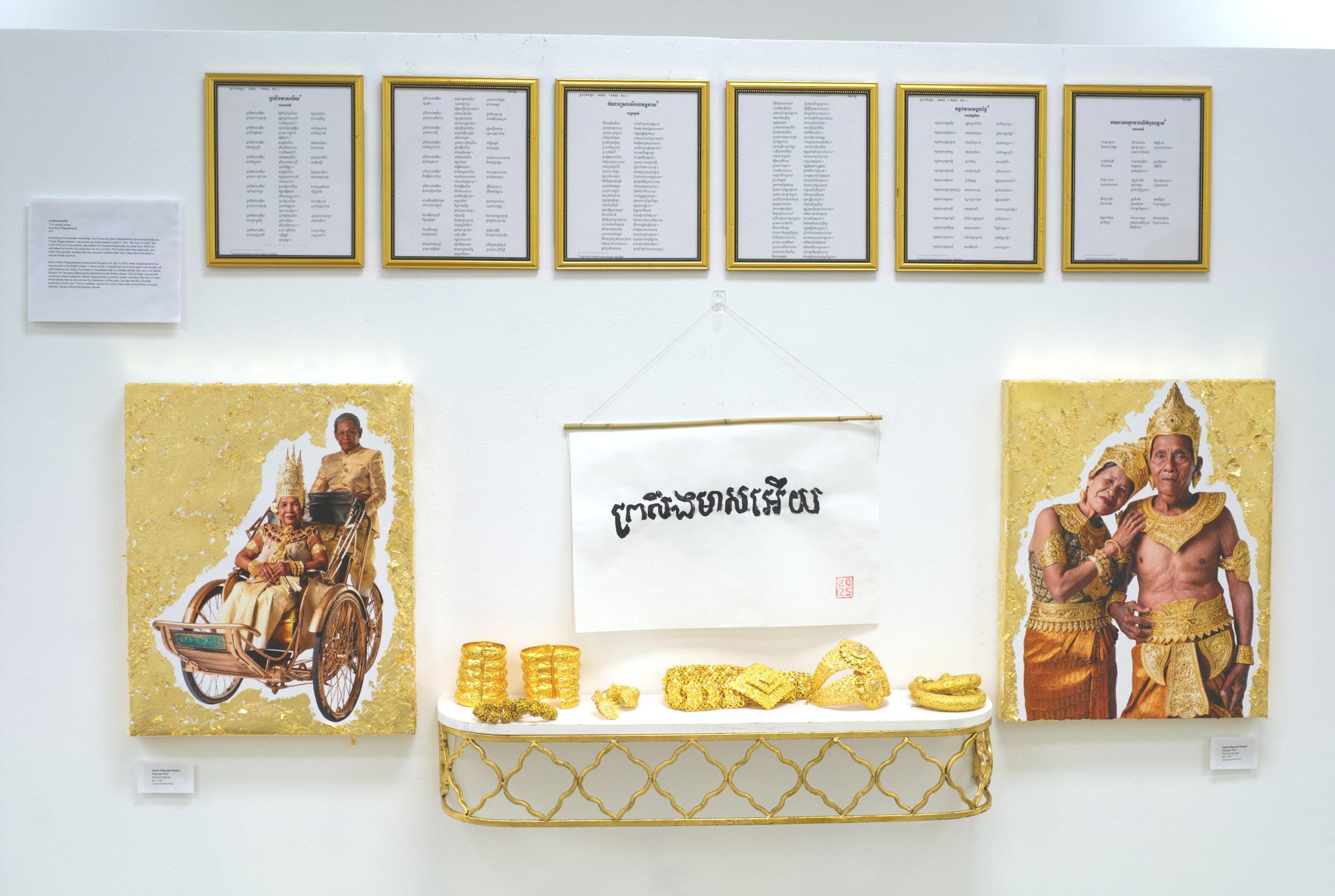
This section begins with ព្រលឹងមាសអើយ (prolung measa aey)—a 17th-century Khmer poem written by Preah Reaj Somphear. Composed in elevated royal speech, the poem is filled with longing, grace, and devotion. While addressed to a princess, it becomes something larger: a love letter to the soul, to beauty, to divinity. I chose to present the original Khmer poem here, to honor the depth and tone of its sacred language. The title of this exhibition, My Soul of Gold, is inspired by Trent Walker’s academic translation of the text—a reflection that, while not literal, captures the essence of what the poem evokes.
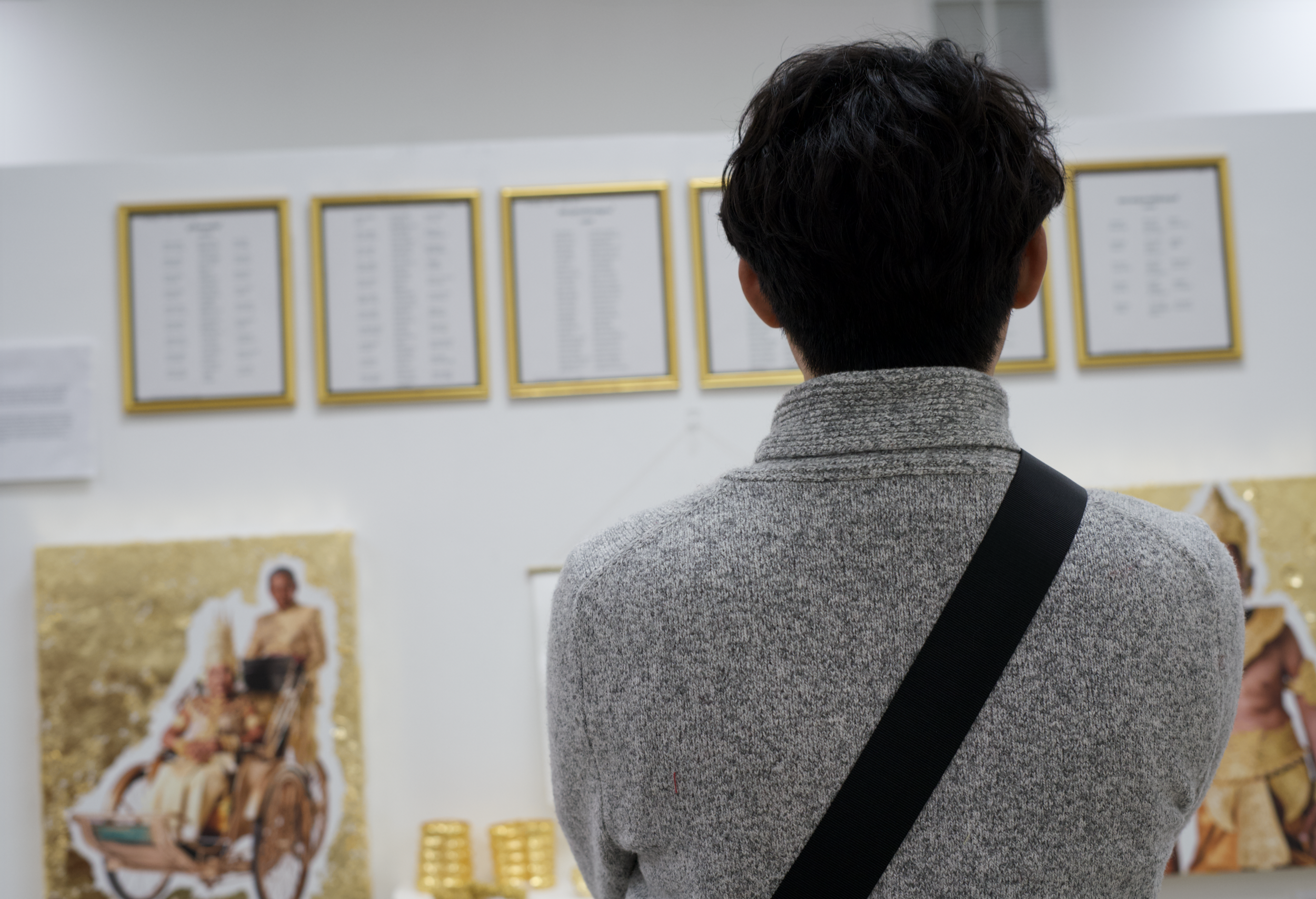
Placed alongside the poem are two photographs by Hao—including the cyclo couple, an image that speaks to intimacy, movement, and care. At the center of this arrangement is a display of royal crown jewelry, surrounded by the crowns of a king and queen—a quiet tribute to the figures who have long embodied dignity, spiritual leadership, and cultural continuity in Cambodian history. Together, these elements form a constellation of love, legacy, and reverence.
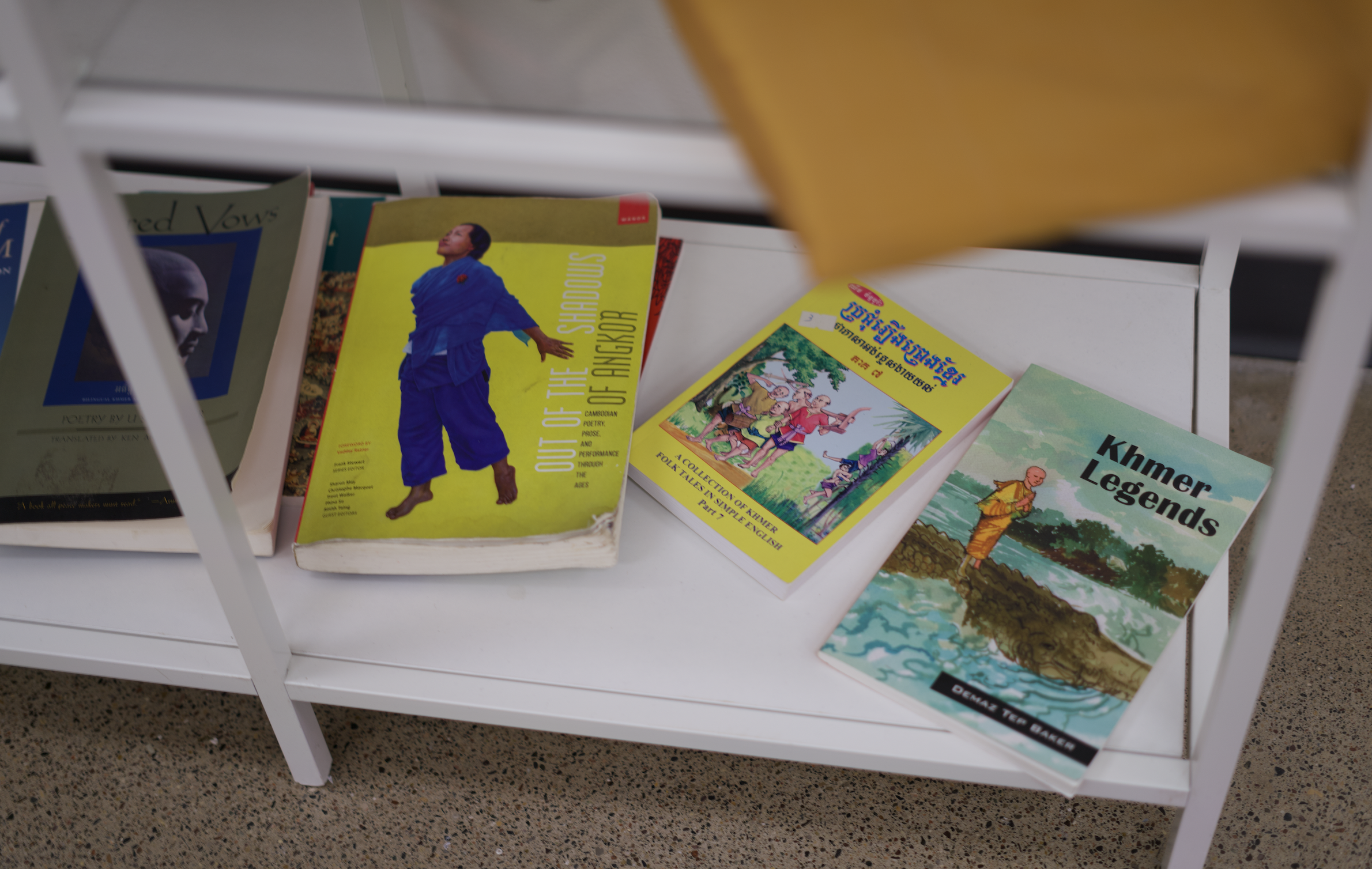
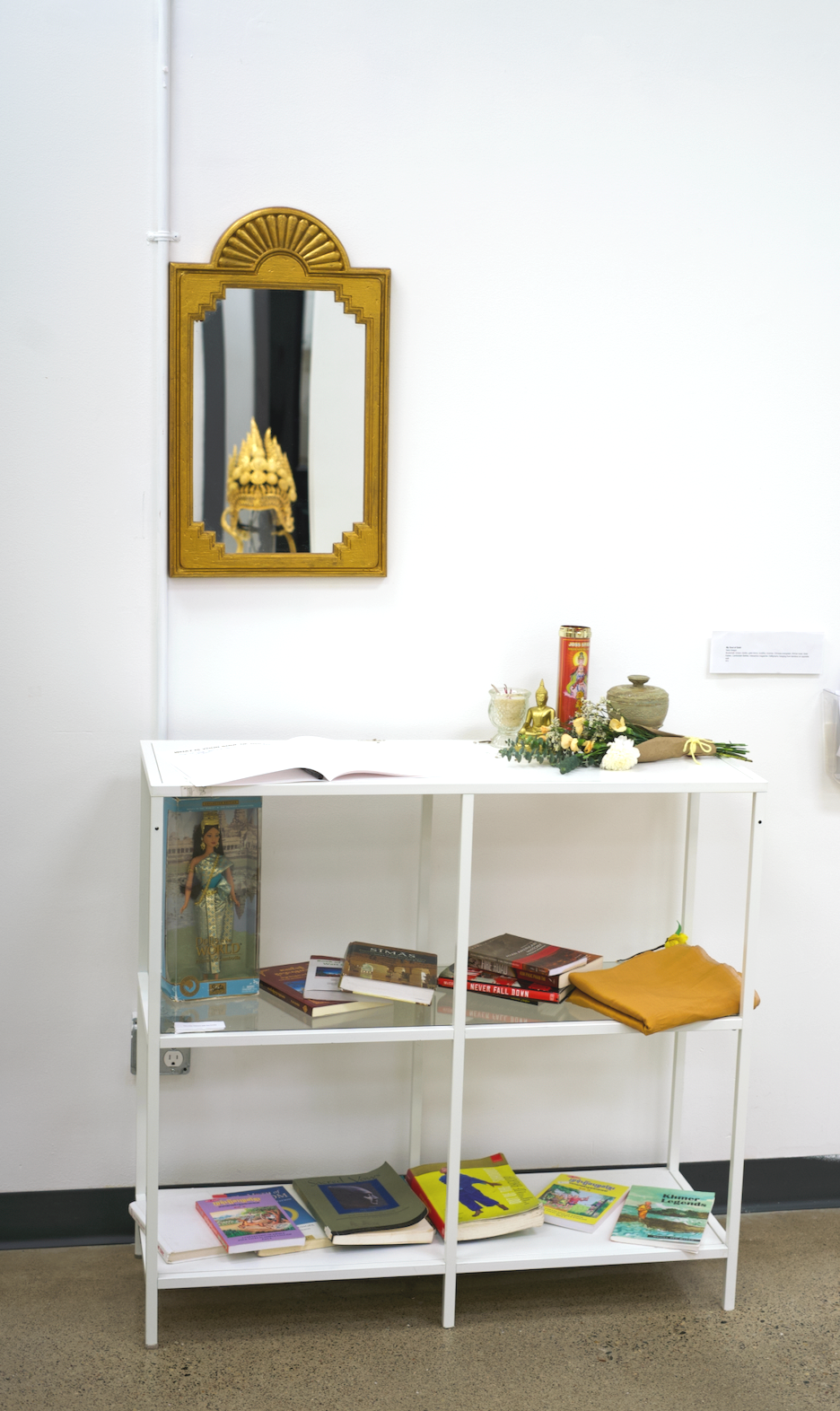
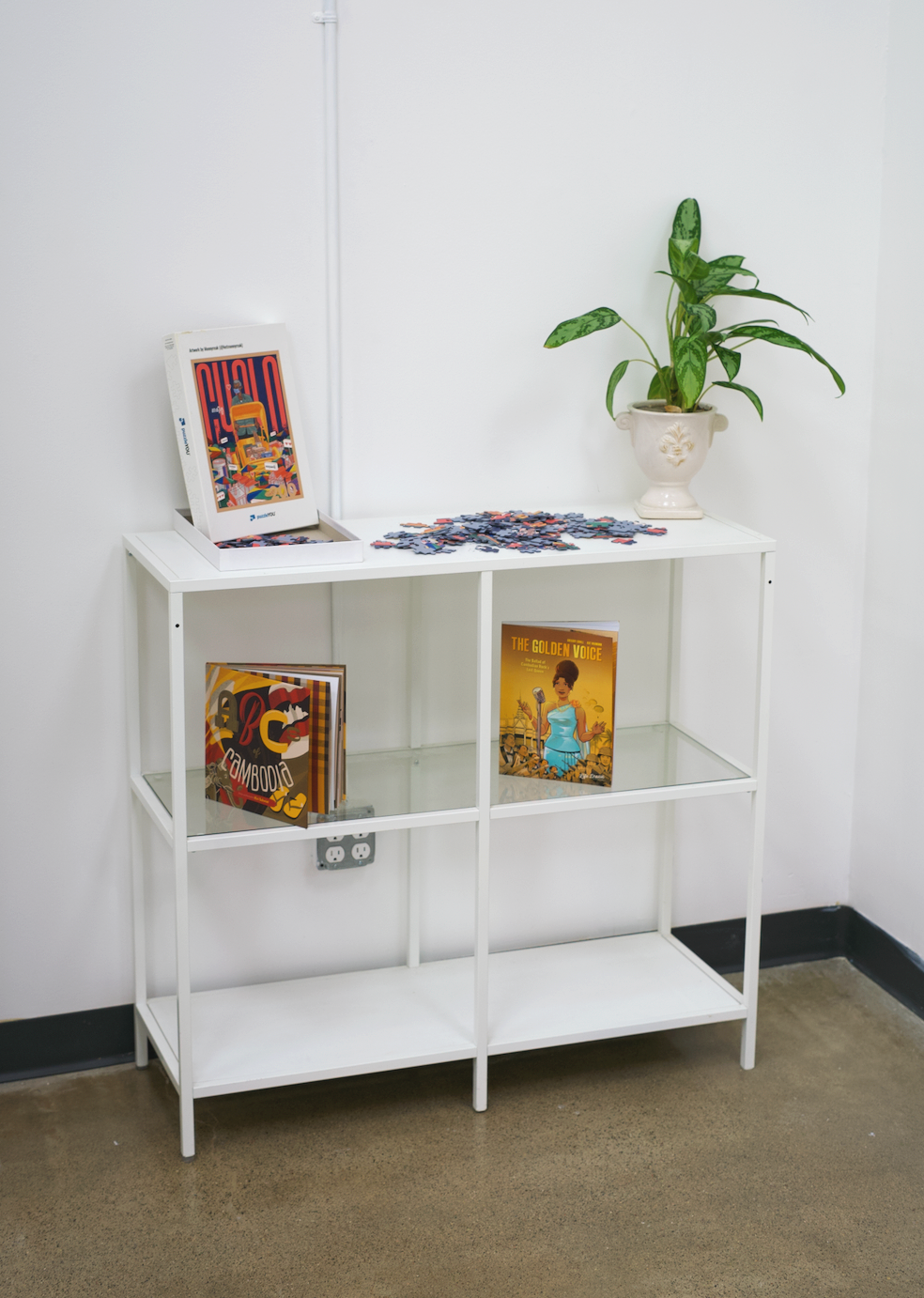
Nearby, a sculptural altar invites you to step closer. A bookshelf holds the book where I first encountered the poem’s translation, a few texts that have shaped my creative life, and a collection of my mother’s books—stories that continue to guide me. A mirror beside it asks you to see yourself within this lineage and reflect on what you carry. Incense burns gently near a golden Buddha, placed as an homage to the teachings and practices of Buddhism—a path that has been central to my personal and spiritual journey
In the end, the true gold is not only in crowns or sacred images, but in the culture we continue to practice, the lands we honor and preserve, and the memories we carry forward together.